
TL;DR: Florida electrical contractors lose good jobs when leads sit too long. The fix is not complicated. Research still shows the same core truth: responding within 5 minutes makes you far more likely to connect and qualify than waiting 30 minutes. This guide shows you how to reduce lead decay yourself using low-cost, practical tools like Google Business Profile Chat, instant text replies, triage questions, and online booking links.
The 5-Minute Sprint in the Sunshine State
Electrical contractors in Florida do not usually lose leads because they do bad work. They lose leads because they respond too late. If your phone rings while you are on a ladder, in traffic, or finishing a panel swap, that prospect is already checking the next company.
The good news is that you do not need a full office staff or an expensive software stack to fix this. Simple automation and built-in phone features can cover the gap. In a market shaped by storm work, service calls, commercial outages, and after-hours demand, fast first contact matters more than perfect first contact.
The stakes are real. The urgency is clear.
The 2-Minute Window: Why Speed Beats Skill in First Contact
In the electrical world, technical skill is assumed. What isn't assumed is availability. When a facility manager in a St. Pete manufacturing plant sees a transformer blow or a retail owner in Tampa loses half their circuit, they aren't looking for a long-term relationship. They are looking for a solution: now.
Research from MIT and Harvard confirms what most shop owners know deep down:
- The 5-Minute Rule: You are 100x more likely to make contact with a lead if you respond within five minutes versus 30 minutes.
- The First Responder Advantage: Up to 78% of customers buy from the first company that responds to their inquiry.
- The Decay Rate: After the first five minutes, your odds of qualifying a lead drop by 80%.
The reality is that your potential clients are calling two or three contractors simultaneously. If you're the third to call back: even if you're the better electrician: you're likely calling someone who has already signed a work order with your competitor.
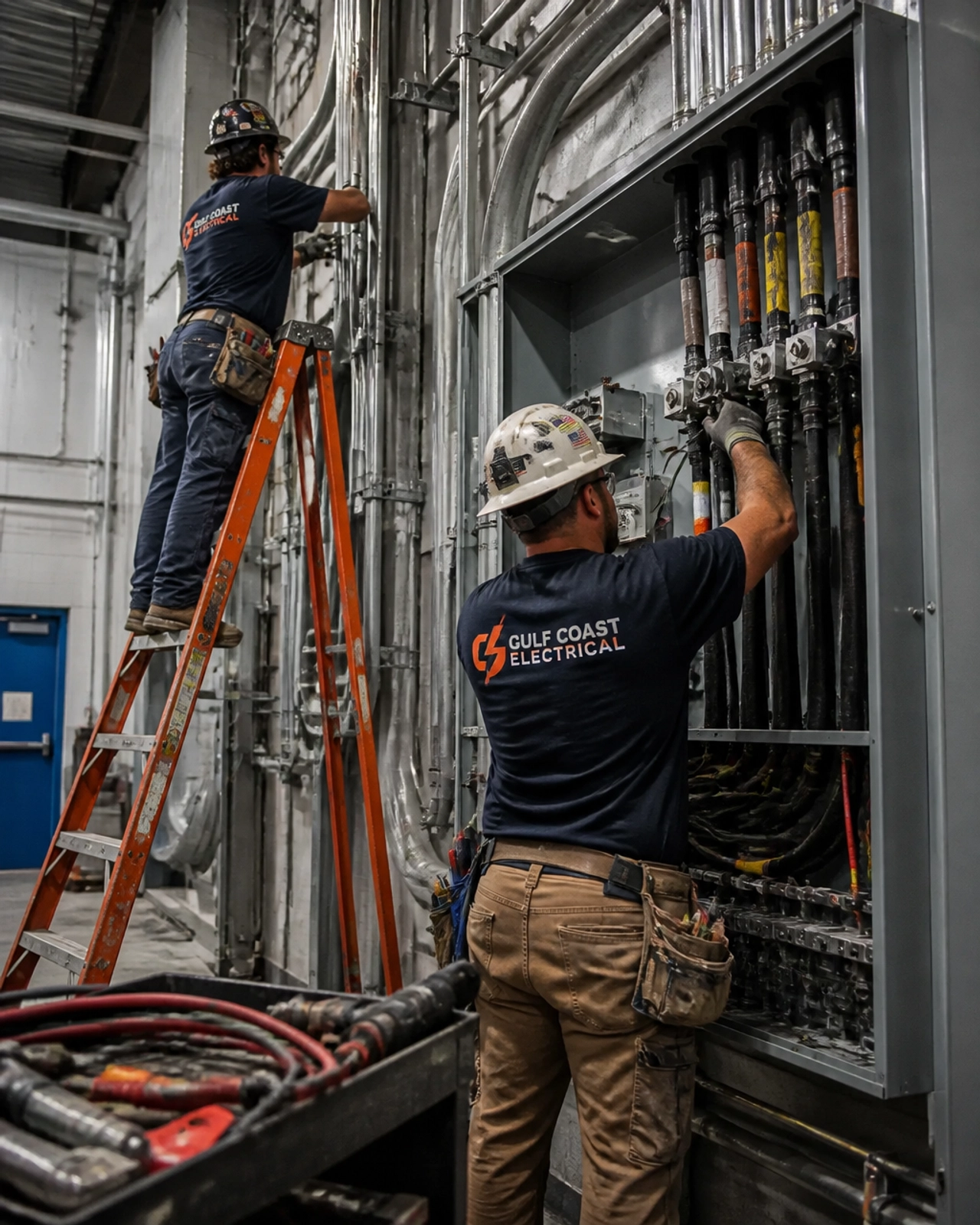
The "I'll Call You Back" Trap: The Hidden Revenue Leak
Many Florida electrical contractors still run lead intake the old way. A form comes in. A voicemail gets left. Somebody says they will call back when they get a second.
This is the "I'll Call You Back" Trap.
In the real world, "a second" usually means after the service call, after the supply house run, or after dinner. By then, the lead has cooled off or hired somebody else. That is lead decay in plain English.
Old Way vs. New Way:
- Old Way: Lead fills out a form → Email sits in an inbox → Owner notices it hours later → Callback happens too late → Competitor gets the job.
- New Way: Lead fills out a form or sends a message → Instant reply goes out in under a minute → Lead answers a few triage questions → Lead gets a booking link or urgent callback path → You stay in the game.
The key is not complexity. The key is speed, clarity, and consistency.
Step-by-Step DIY Guide
You can build a simple first-response system without hiring an assistant and without buying enterprise software. Start with these four pieces.
1. Enable Google Business Profile Chat with an instant welcome message
A lot of electrical leads in Florida start on Google. If your Google Business Profile allows messaging, you create one more path for a customer to reach you fast.
What to do:
- Log into your Google Business Profile.
- Turn on messaging or chat if the feature is available in your profile setup.
- Add a short welcome message that sets expectations and moves the lead forward.
- Make sure message notifications hit a phone that someone actually checks.
Simple welcome message example:
"Thanks for contacting [Company Name]. Tell us what kind of electrical issue you have, your ZIP code, and whether this is urgent. We reply as fast as possible during business hours."
Why this works:
- It confirms the message was received.
- It reduces uncertainty.
- It starts qualification right away.
Exec takeaway: If a customer finds you on Google, do not make them hunt for the next step.

2. Set up a basic "Speed-to-Lead" text responder
If you miss calls or web leads while working in the field, use basic phone automation first. You do not need to overbuild this.
Low-cost options:
- iPhone: Use Focus modes, Shortcuts, auto-reply features tied to driving or do-not-disturb settings, and saved text replacements.
- Android: Use auto-reply apps, Google Voice workflows, business texting apps, or canned responses.
- Simple apps: Google Voice, Jobber, OpenPhone, Grasshopper, or other entry-level texting tools can help route and reply fast.
What your first text should do:
- Confirm you got the inquiry
- Set expectations
- Ask 2 to 4 triage questions
- Offer a booking link or callback path
Example first response text:
"Thanks for contacting [Company Name]. We got your message. Is this for residential or commercial work? What city are you in? Is this an emergency, loss of power, or a quote request? If you want, you can book here: [booking link]"
Best practice: Keep it short enough to read on one screen. If it feels like paperwork, people stop responding.
Exec takeaway: A fast imperfect text beats a perfect callback 45 minutes later.
3. Use a triage checklist to qualify the lead
Not every lead deserves the same response. You need enough information to decide whether this is an emergency dispatch, a same-day callback, or a standard estimate.
Triage Checklist:
- What type of job is this? Emergency repair, troubleshooting, installation, panel upgrade, estimate, inspection, or other.
- Is the issue urgent? No power, partial outage, burning smell, sparking, tripping breaker, storm damage, or routine request.
- Where is the job located? City, ZIP code, and service area fit.
- Is it residential or commercial?
- What is the best callback number?
- When do you need service? Now, today, this week, or flexible.
- Is there a safety issue? Smoke, heat, exposed wire, water near electrical, or business shutdown.
- Do they want to book now? If yes, send the booking link immediately.
How to use it:
- Emergency leads get escalated fast.
- Good-fit estimate leads get routed to booking.
- Out-of-area or low-fit leads do not eat up your whole day.
The bottom line: Triage protects your time and improves close rates.

4. Put an online booking link in the first response
This is one of the easiest fixes in the whole system. If the lead is not an emergency, let them self-book instead of waiting on phone tag.
Simple tools:
- Calendly
- Jobber
- ServiceTitan
- Housecall Pro
- Google Calendar appointment scheduling
What to send:
"To save time, you can grab the next available estimate slot here: [booking link]"
Why it matters:
- It cuts down on missed calls
- It gives the customer a next step
- It keeps leads moving after hours
- It helps smaller shops act bigger without adding payroll
Important note: Use booking links carefully for true emergencies. If someone has a burning smell or full outage, direct them to call immediately or mark the issue as urgent.
Exec takeaway: If your first message does not tell the lead what to do next, many of them will do nothing.
Keep It Educational, Keep It Working
You do not need a massive software rollout to improve lead response. Most Florida electrical contractors can start with one welcome message, one text template, one triage checklist, and one booking link.
Meanwhile, your competitors are already getting faster. Some have CSRs. Some have franchises behind them. Some have automation handling the first touch. If you wait, the gap widens.
Exec Takeaway: The Bottom Line
The math is simple: speed is the highest-leverage variable in your sales funnel. You can spend money on SEO, Local Services Ads, trucks, wraps, and referral programs, but if your response time drifts past 10 minutes, your marketing is leaking.
The bottom line: If you are not responding inside the 5-minute window, you are giving away jobs. The good news is that you can fix a big part of the problem yourself with low-cost tools and a repeatable process.
Stop Losing Leads to the Clock
Start simple. Turn on messaging. Build one instant response. Ask better triage questions. Add a booking link.
If you want help mapping the gaps in your response process, get a free AI Operations Audit from Bafmin and see where leads are slipping through.