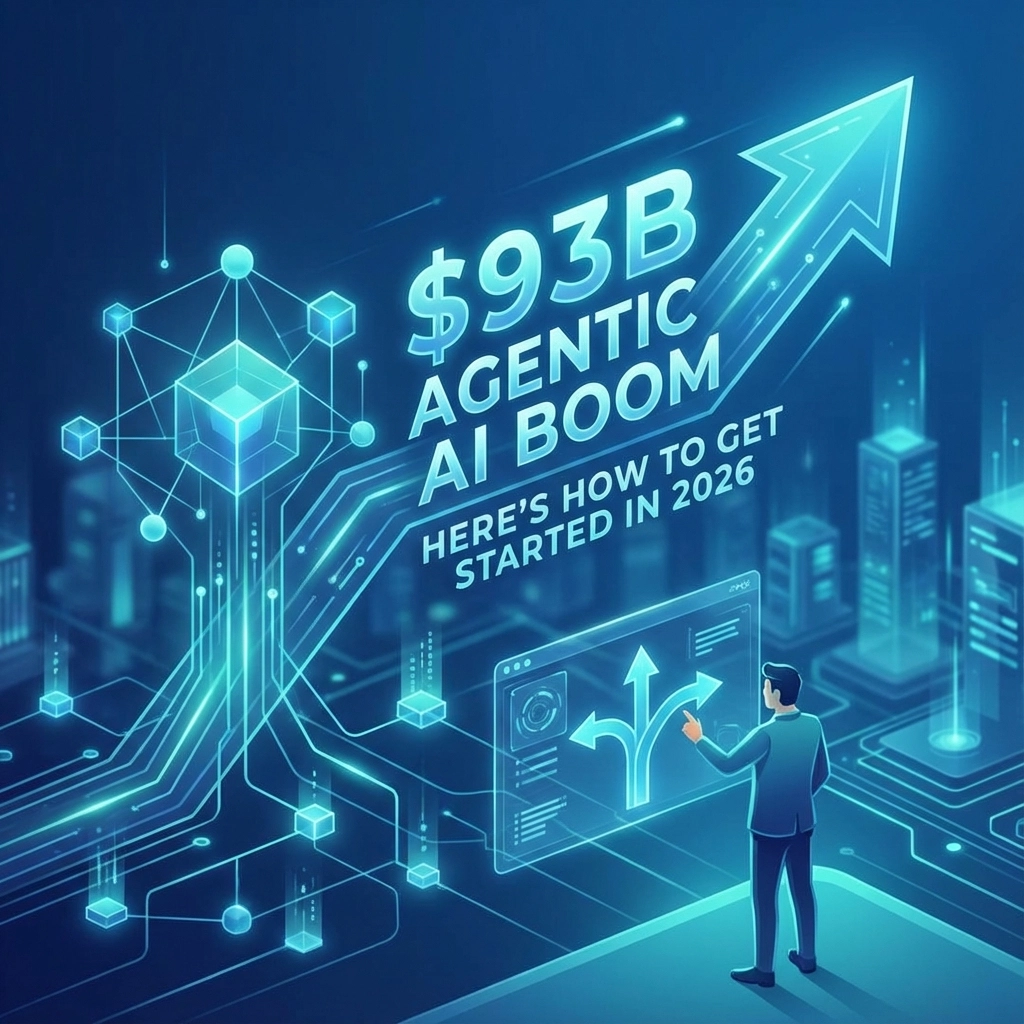
TL;DR Knowledge Block
Agentic AI represents autonomous systems that make decisions and take actions without constant human supervision—unlike simple chatbots or automation tools that just follow scripts.
The 2026 Market Reality: 79% of companies already use some form of agentic AI, with 96% planning expansion this year. Enterprise spending on autonomous agents will hit 10-15% of IT budgets in 2026, growing toward $1.3 trillion globally by decade's end.
What This Means For You: The businesses winning in 2026 aren't just "using AI"—they're building autonomous operations where intelligent agents handle scheduling, compliance tracking, customer follow-up, and process optimization without micromanagement.
The Stakes: Your competitors are already implementing these systems. The gap between traditional automation and truly autonomous operations is widening fast.
What's Really Happening in 2026?
If you've been hearing "AI" thrown around like confetti at a parade, you're not alone.
Every software vendor, consultant, and tech blog is shouting about artificial intelligence. But here's what most of them aren't telling you: there's a massive difference between using AI tools and running an autonomous enterprise.
2026 is the year that difference becomes impossible to ignore.
The market is shifting from simple automation—tools that do exactly what you tell them—to agentic AI systems that think, adapt, and act on your behalf. We're talking about software agents that don't just respond to commands. They pursue goals, make judgment calls, and improve themselves over time.
Think of it this way: traditional automation is like a vending machine. You push a button, you get a snack. Agentic AI is more like a sous chef—you tell them you need dinner for eight by 7 PM, and they figure out the menu, order ingredients, prep the kitchen, and adjust on the fly when someone calls with a dietary restriction.
The stakes are real.

Why "Agents" Instead of "Bots"?
Let's break down what makes agentic AI fundamentally different from the automation tools you've been pitched for the last decade.
Traditional Automation:
- Follows rigid if-then rules
- Breaks when conditions change
- Requires constant updates and maintenance
- Works great for repetitive, predictable tasks
- Stops dead when it encounters something new
Agentic AI:
- Pursues goals autonomously
- Adapts to changing conditions in real-time
- Learns from outcomes and improves performance
- Handles complex, multi-step workflows
- Makes decisions within defined parameters
Here's a real-world example: A traditional automation might send appointment reminders at a scheduled time. An agentic system monitors customer behavior, identifies who's most likely to no-show based on historical patterns, adjusts reminder timing and tone accordingly, and automatically offers reschedule options before cancellations happen.
One follows orders. The other solves problems.
The Numbers Behind the Shift
The research doesn't lie. The adoption curve for agentic AI is steep—and it's happening right now.
Current State (Early 2026):
- 79% of companies report some level of agentic AI adoption already in place
- 96% plan to expand their agentic AI usage this year
- Enterprise organizations hold 45.7% of the market share—they're betting big on autonomous operations
- AI solution providers dominate with 64.06% market share, offering ready-to-deploy agent systems
Where the Money's Going:
- 10-15% of IT spending in 2026 will be dedicated to agentic AI
- By later this decade, that number climbs to roughly 26% of budgets—approximately $1.3 trillion globally
- Major players like Microsoft, Google, and Salesforce are pouring resources into autonomous agent platforms
Translation? The big dogs aren't testing the waters. They're all-in.
What This Means for Your Business
If you're running a plumbing company, a machine shop, a roofing business, or a small healthcare practice, you might be thinking: "That's great for Microsoft, but what does this have to do with me?"
Everything.
The autonomous operations model isn't just for enterprise giants anymore. The barrier to entry has collapsed. What used to require a team of developers and a six-figure budget now runs on accessible platforms at a fraction of the cost.
Here's what's already happening in trades and small manufacturing:
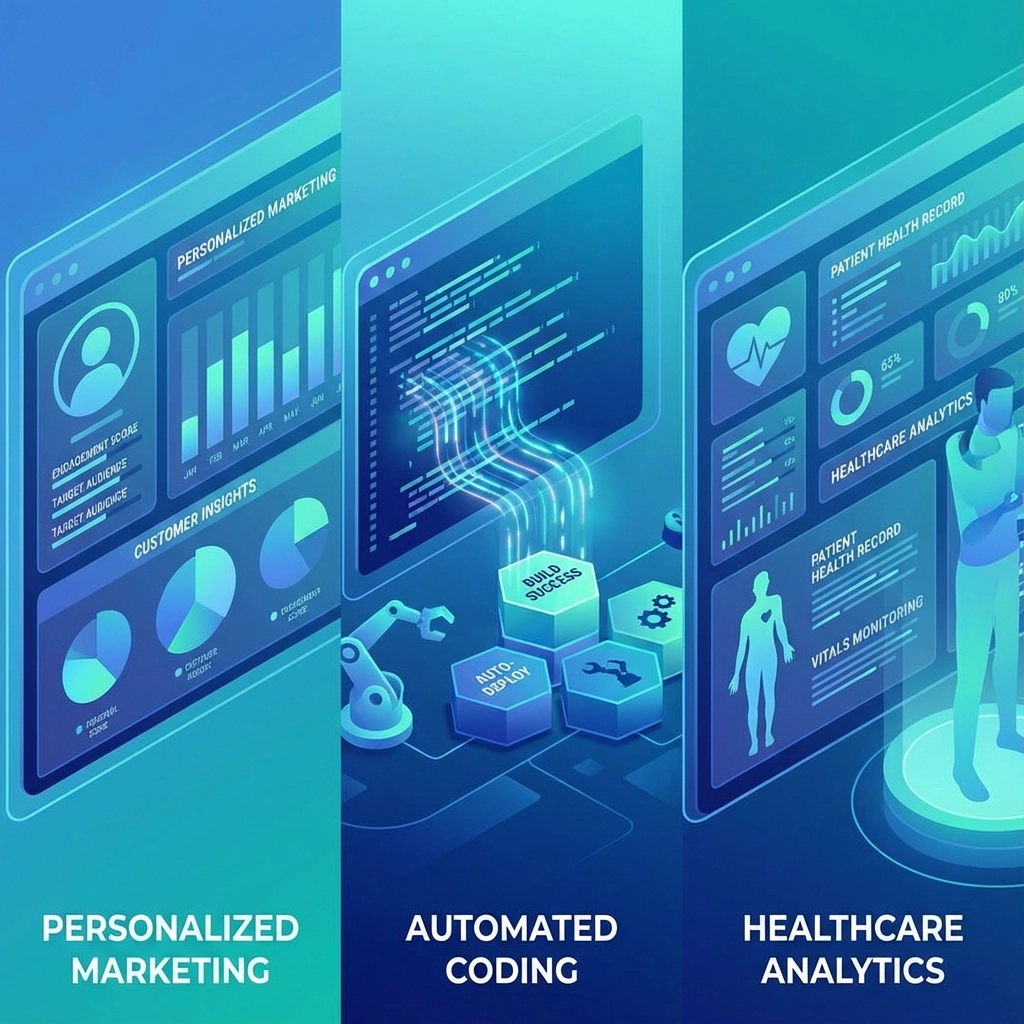
Personalized Marketing (32% of use cases): Agents track customer service histories, identify upsell opportunities, and send perfectly timed follow-ups based on seasonal patterns and past purchases—without you lifting a finger.
Automated Compliance Tracking (Healthcare/Trades): Instead of scrambling during audits, autonomous agents continuously document processes, flag potential violations before inspections, and maintain real-time evidence trails.
Process Optimization (Manufacturing/Job Shops): Agents monitor production workflows, identify bottlenecks as they develop, automatically adjust scheduling, and recommend efficiency improvements based on actual performance data.
You're not just automating tasks. You're delegating judgment.
Old Way vs. New Way: A Reality Check
Let's make this concrete.
The Old Way (Traditional Automation):
- You set up a Zapier workflow to send new leads to your CRM
- It works perfectly... until your CRM updates and the integration breaks
- You spend three hours troubleshooting
- Meanwhile, leads sit uncontacted
- You finally fix it, but you're already behind
The New Way (Agentic AI):
- You deploy an autonomous lead management agent with a goal: "Ensure every lead gets qualified contact within 15 minutes"
- The agent monitors incoming leads across all channels
- It prioritizes based on lead score, time of day, and team availability
- When your CRM hiccups, the agent routes through backup channels
- It learns which follow-up approaches convert best and adjusts accordingly
- You check a dashboard once a day and see results, not broken workflows
One requires you to be the mechanic constantly under the hood. The other requires you to be the business owner focused on growth.

How to Start Moving Toward Autonomous Operations
The good news? You don't need to overhaul everything overnight.
Start with high-impact, repetitive decisions:
- Lead qualification and routing
- Appointment scheduling and confirmations
- Compliance documentation and tracking
- Inventory monitoring and reordering
- Customer follow-up and retention campaigns
Ask yourself these questions:
- What decisions do I make every day that follow a pattern?
- Where do things fall through the cracks when I'm busy?
- What tasks require "judgment" but not deep expertise?
- Where would 24/7 monitoring prevent problems before they cost money?
Those are your prime candidates for agentic systems.
The implementation roadmap:
- Identify one high-value process (start small, prove value)
- Define clear goals and success metrics
- Deploy an agent with defined parameters and decision authority
- Monitor performance and adjust guardrails
- Scale to additional processes as you build confidence
This isn't about replacing your team. It's about freeing them from administrative quicksand so they can focus on the skilled work that actually makes you money.
The Bottom Line
2026 is the inflection point where "using AI" and "becoming autonomous" split into two different paths.
One path leads to incremental gains—a chatbot here, an automation there, all requiring constant babysitting and maintenance.
The other path leads to operations that scale without proportional headcount, stay compliant without constant vigilance, and deliver consistent customer experiences without heroic daily effort.
The businesses thriving in 2026 aren't the ones with the most AI tools. They're the ones that built autonomous operations where intelligent agents pursue business goals independently.
The market has spoken. The money is moving. The adoption curve is steep.
The question isn't whether agentic AI is real. The question is whether you're building autonomous operations while your competitors are still fiddling with chatbots.
The gap is widening. Fast.
If you're ready to explore what autonomous business process optimization looks like for your operation, we help businesses make this transition every day. No jargon. No six-figure price tags. Just practical implementations that deliver measurable ROI.
Sources
- Market Size and Enterprise Adoption Data: Allied Market Research, "Agentic AI Market Analysis 2025-2026" — Enterprise segment market share and solution dominance statistics.
- Organizational Adoption Metrics: Industry surveys compiled by technology research firms tracking agentic AI deployment across organizational categories, Q4 2025 – Q1 2026.
- IT Spending Projections: IDC (International Data Corporation), "Agentic AI Investment Forecast 2026-2030" — IT budget allocation trends and growth projections for autonomous systems.
- Vendor and Platform Intelligence: Market analysis of Microsoft Azure AI Studio, Google Vertex AI Agent Builder, and Salesforce autonomous system investments, January 2026.
- Use Case Distribution: Technology adoption research tracking primary agentic AI applications across personalized marketing, automated coding, and healthcare analytics sectors.
Last updated: February 10, 2026
About Bafmin: We're a consulting firm that helps businesses implement autonomous operations—not just AI tools. With 17+ years in process optimization and automation, we translate the agentic AI revolution into practical systems that work for trades, manufacturing, and service businesses. Learn more about our approach.