
By now, you've been pitched generative AI at least a dozen times. Consultants wave shiny slides promising "100X productivity" and "autonomous everything." Yet across boardrooms, the whispered truth is more uncomfortable: 95% of generative AI pilots are failing, according to RAND Corporation research.
This isn't a technology problem. It's a clarity problem. Business leaders are drowning in buzzwords while trying to make real decisions with real budgets. You don't need another pitch deck full of impossible promises. You need straight talk about where GenAI actually delivers value—and where it's still burning through investor money with nothing to show for it.
The Hype Machine vs. Business Reality

Let's start with what you're actually hearing in vendor meetings:
- "AI agents that think like humans" — In reality, these are sophisticated pattern matchers that can automate specific tasks well, but have no actual understanding of your business.
- "Autonomous decision-making" — Usually means "makes suggestions that a human still has to approve," which is often the right approach.
- "Digital transformation through AI" — Often code for "we'll sell you expensive software and hope you figure out how to use it."
The language is designed to excite, not inform. And when you're making investment decisions, excitement is the enemy of good judgment.
Where Real GenAI Value Actually Lives
Cut through the noise and you'll find three areas where generative AI is delivering measurable results today—not in some theoretical future, but in production systems right now.
1. Back-Office and Operational Automation
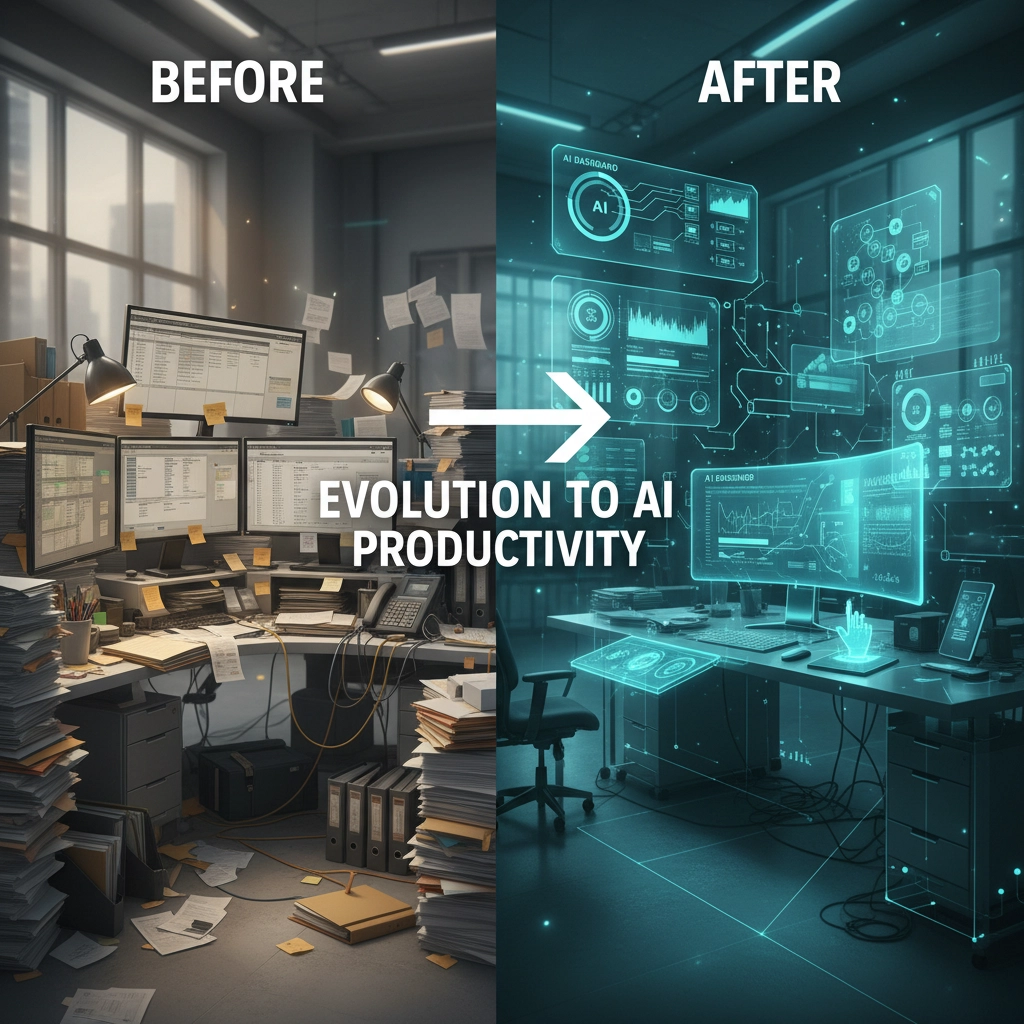
This is the unsexy work that actually pays off. GenAI excels at processing documents, extracting data from unstructured sources, and handling the endless paper-pushing that bogs down operations teams.
Real example: A mid-sized manufacturer reduced invoice processing time by 70% using AI to extract line items, match against purchase orders, and flag discrepancies. No robots, no "digital workers"—just smart automation of a tedious but critical process.
Why it works: These tasks have clear inputs, clear outputs, and tolerance for occasional errors that humans can catch in review. The AI doesn't need to "understand" your business—it needs to read documents accurately and route them correctly.
2. Content and Knowledge Acceleration
Generative AI genuinely accelerates content creation and knowledge work. Marketing teams, technical writers, and customer service operations are seeing real productivity gains.
Real example: A B2B services firm cut proposal development time by 40% using AI to draft initial responses, pulling from a knowledge base of past successful proposals. Senior staff now spend time refining and strategizing rather than writing from scratch.
The catch: Output quality depends entirely on input quality. AI amplifies what you feed it. If your knowledge base is outdated or poorly organized, AI will confidently produce polished garbage.
3. Maintenance and Asset Optimization

In manufacturing, logistics, and asset-heavy industries, AI-driven predictive maintenance is moving from experiment to expectation. The combination of sensor data, historical patterns, and AI analysis is reducing unplanned downtime.
Real example: A food processing company implemented predictive maintenance on their packaging lines, reducing unplanned downtime by 35% and extending equipment life by identifying issues before they became failures.
Why it works: This isn't about AI making complex decisions—it's about AI spotting patterns in data that humans would miss, then alerting humans to take action.
The Uncomfortable Truth About Implementation

Here's what vendors won't tell you: the technology is often the easy part. Most GenAI failures happen because of:
- Poor data quality: AI can't fix your data problems. It will expose them, loudly and expensively.
- Unclear success metrics: "Increase efficiency" is not a goal. "Reduce invoice processing time from 15 minutes to 4 minutes" is a goal.
- Change management gaps: People need to trust and adopt new tools. Technical capability means nothing if your team routes around it.
- Scope creep: Starting with "automate everything" instead of "automate this one painful process really well."
The 95% failure rate isn't because AI doesn't work. It's because organizations skip the boring foundational work in pursuit of exciting headlines.
What Smart Leaders Are Doing Instead
The executives getting real value from GenAI share a few common approaches:
- Start with pain, not technology. Identify your three most time-consuming, error-prone manual processes. Those are your candidates—not whatever the latest AI demo showed.
- Demand specificity from vendors. "How exactly will this work with our existing ERP?" is more valuable than "What's your AI roadmap?"
- Build in human checkpoints. The best AI implementations keep humans in the loop for decisions that matter, using AI to handle volume and flag exceptions.
- Measure relentlessly. Set baselines before you start. Track time saved, errors reduced, and costs avoided—not "AI adoption rates."
- Plan for iteration. Your first implementation won't be perfect. Build in time and budget for refinement based on real-world usage.
The Bottom Line
Generative AI is a powerful tool, but it's just that—a tool. The organizations winning with AI aren't the ones chasing the most advanced technology. They're the ones with the clearest understanding of their own problems and the discipline to solve them systematically.
You don't need to understand transformer architectures or large language model training. You need to understand your operations, your data, and your people. AI handles the rest.
At Bafmin, we help business leaders cut through the noise and build AI strategies that actually work. No buzzwords, no impossible promises—just practical guidance on where to invest and how to implement. If you're tired of being sold the future and ready to improve the present, let's talk.