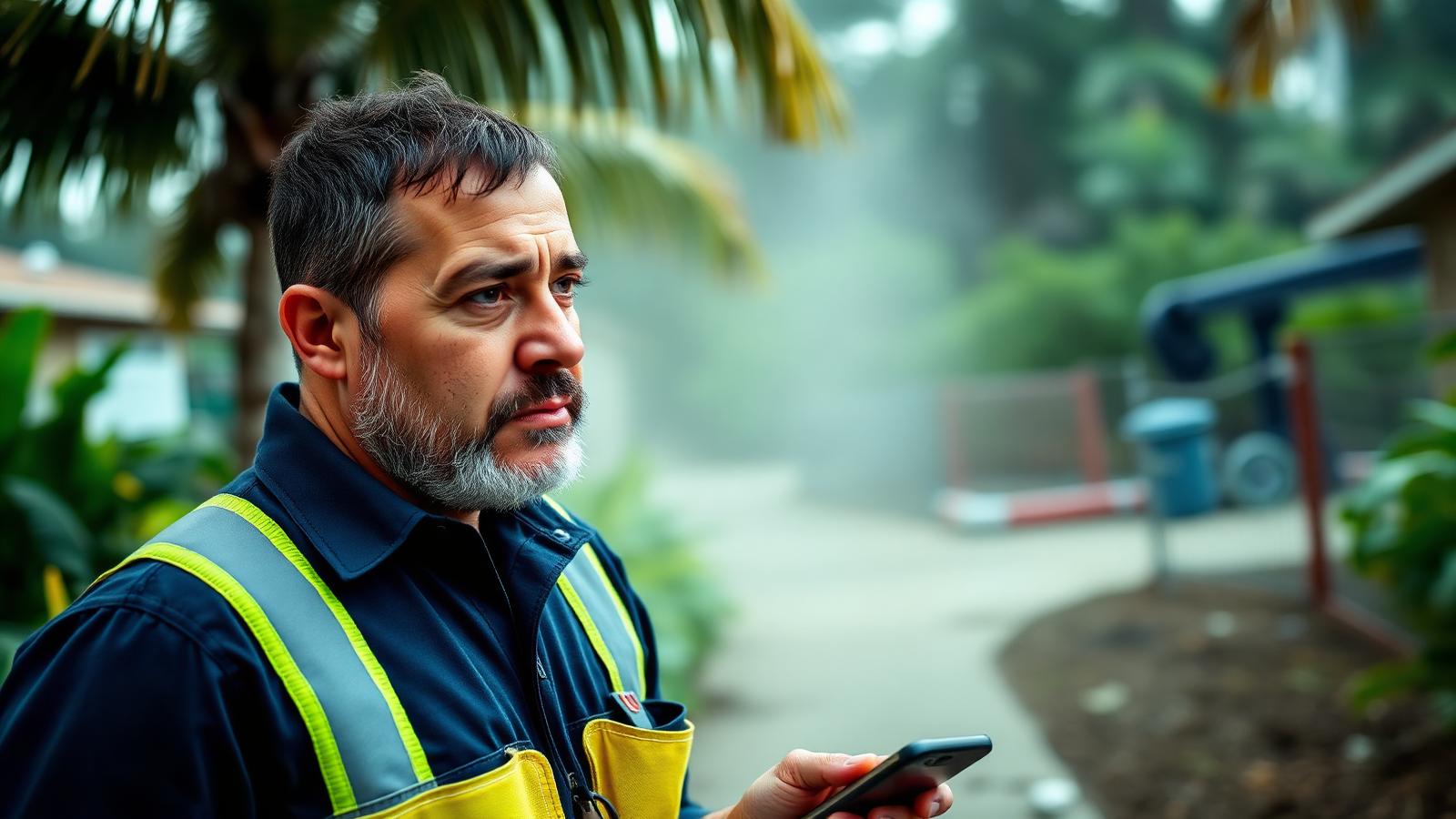
The phone rings at 6:45 AM. It's your lead crew chief. He's at the commercial property in Sarasota, the one with the sensitive drainage system and the specific hybrid turf that burns if you look at it wrong.
"Hey boss, which chemical mix did we use for the south-east perimeter last month? And where's the shut-off for the new irrigation zone we put in? The notes in the app are blank."
You know the answer. You always know the answer. You spend twenty minutes on the phone explaining what should have been documented six months ago. You hang up, but you aren't relieved. You're exhausted. You've just spent your most productive hour of the day acting as a human database.
This is the Invisible Leash.
It's the reality for most landscaping and pest control owners across Florida. You've built a successful business, but you haven't built a system. You've built a collection of "heroes": veteran employees who hold the keys to your operations in their heads. If they leave, or if you try to take a week off, the whole machine grinds to a halt.
Small businesses live and die by visibility. The good news is that artificial intelligence has matured to the point where you can finally cut the leash.
The Knowledge Leak: Why Your "Heroes" Are a Liability
In the trades, we value loyalty and expertise. We love the guy who's been with the crew for ten years and knows every property quirk from Naples to Jacksonville. But from a business perspective, that "hero" is a single point of failure.
When critical business intelligence: property history, client preferences, chemical ratios, and routing logic: lives only in a person's brain, you are paying the Tribal Knowledge Tax.
The stakes are real. If that lead technician walks into your office today and hands in his two-week notice, he isn't just leaving; he's taking your operational manual with him. You'll spend the next three months scrambling, apologizing to angry clients, and paying for rework because the new guy "didn't know how we do things here."
The Reality of the "Human Search Engine"
If you are the only one who knows how to bid a complex landscape install or which pest treatment plan is compliant with the latest Florida regulations, you aren't the owner. You are the bottleneck.
The key is to realize that every time you answer a question that should have been in a system, you are subsidizing inefficiency. You are preventing your team from learning how to solve problems themselves, and you are ensuring that you can never truly scale.
The Chaos Tax: Quantifying the Cost of Inefficiency
We talk a lot about "efficiency," but let's put some "Clean Grit" numbers on it. In the Florida landscaping and pest control world, we call this the Chaos Tax. It's the measurable, hard-dollar cost of operational drift.
For a mid-sized Florida firm with 10 to 15 field staff, the Chaos Tax typically breaks down into three buckets:
- The Onboarding Drag: Without a central knowledge base, it takes a new hire 16 weeks to become independently profitable instead of 8. At a fully burdened labor rate of $25/hour, that's $8,000 in lost margin per hire.
- The Callback Loop: Tribal knowledge is inconsistent. Inconsistency leads to mistakes: burned turf, missed pests, or wrong chemical applications. If your "knowledge leak" causes just a 3% increase in callbacks, you are losing thousands in labor, fuel, and chemical costs, not to mention the hit to your reputation.
- The Productivity Gap: When a crew stops for 20 minutes to call the office for instructions, you lose a stop. One lost stop per truck per day across a 5-truck fleet is over $100,000 in unrealized revenue per year.
The bottom line: The Chaos Tax isn't just a nuisance; it's a silent killer of your profit margins. It's the difference between a business that prints money and one that just pays the bills.
Stop the Revenue Leak Today
Are you paying the Chaos Tax without even knowing it? Most Florida trade owners are losing 15-25% of their potential profit to undocumented processes and "phone tag" management.
Take the 2-Minute Revenue Leak Audit and find out exactly where your landscaping or pest control business is bleeding cash.
SOP Theater vs. The Digital Nervous System
Most "business gurus" will tell you the answer is more SOPs (Standard Operating Procedures). They want you to sit down and write a 50-page manual that no one will ever read.
We call this Documentation Theater.
It looks like work, but it doesn't change anything. A binder sitting on a shelf in the office doesn't help a crew lead in the middle of a 95-degree afternoon in Tampa. By the time they find the information, the profit on the job has already evaporated.
The old way was a manual. The new way is a Digital Nervous System.
Instead of static documents, you need an autonomous layer that captures data in real-time. You need a system that "listens" to field notes, organizes property photos, and flags compliance issues before they become fines.
Old Way vs. New Way
- The Old Way: You spend Sunday nights reviewing paper manifests and trying to remember if the client in Clearwater wanted the palms trimmed or just the hedges.
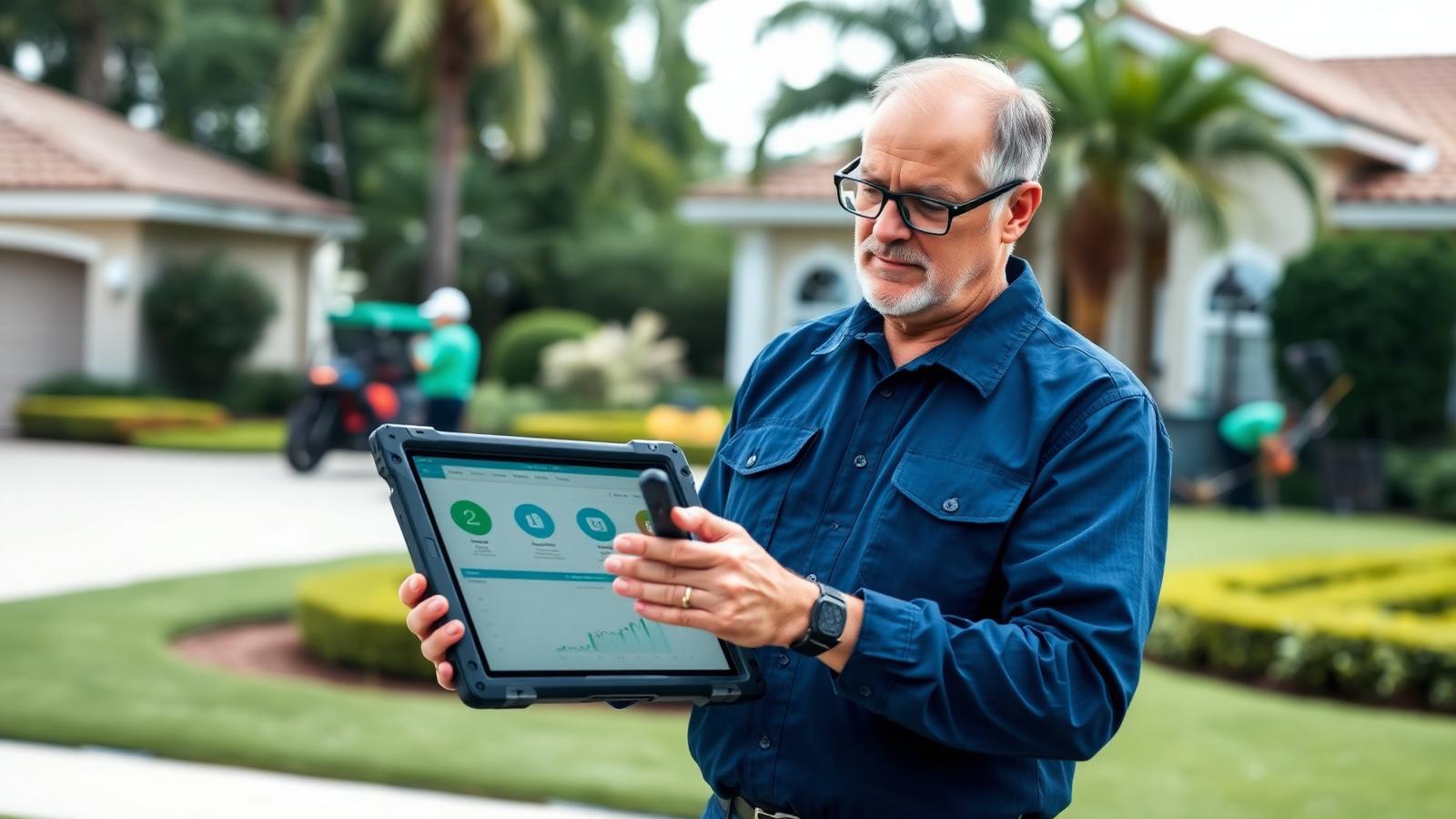
- The New Way: An AI Automation scans the client's historical service records, looks at the recent photos uploaded by the crew, and automatically generates a "Property Cheat Sheet" for the morning briefing.
Transforming Tribal Knowledge into Operational Power
The goal isn't to replace your people; it's to give them a brain that doesn't forget.
At Bafmin, we deliver intelligent AI agents that work autonomously to boost productivity. For a landscaping or pest control owner, this means creating a "Clone of Your Best Manager."
Imagine an agent that knows every Florida pesticide regulation by heart. When a technician logs a chemical mix, the AI checks it against the property's square footage and the current weather conditions. If something is off, it alerts them before they spray.
This isn't "tech-bro" futurism. This is small business consulting built for the grit of the Florida trades. It's about taking the expertise that currently lives in your head and turning it into a system that works 24/7.
Exec Takeaway: Cutting the Leash
You didn't start a landscaping or pest control business to be a dispatcher for the rest of your life. You started it to build something that provides freedom and value.
The reality is that your competitors in Florida are already moving toward automation. They are tired of the phone tag trap and the constant firefighting. The urgency is clear: the longer you wait to document your "house way" of doing things, the more expensive it becomes to fix.
The steps are simple but require a shift in mindset:
- Identify the Single Points of Failure: Who are the "heroes" in your company? What information only exists in their heads?
- Kill the Paper Manifest: Move your data into a centralized, digital format that an AI can actually read and analyze.
- Build the Agent: Create an autonomous system that handles the "search engine" tasks so you don't have to.
The Invisible Leash only stays on as long as you let it. It's time to stop being the only person with the answers and start being the person with the most profitable systems in the state.
Ready to stop the Chaos Tax? Let's build a digital nervous system that works as hard as your crews do.