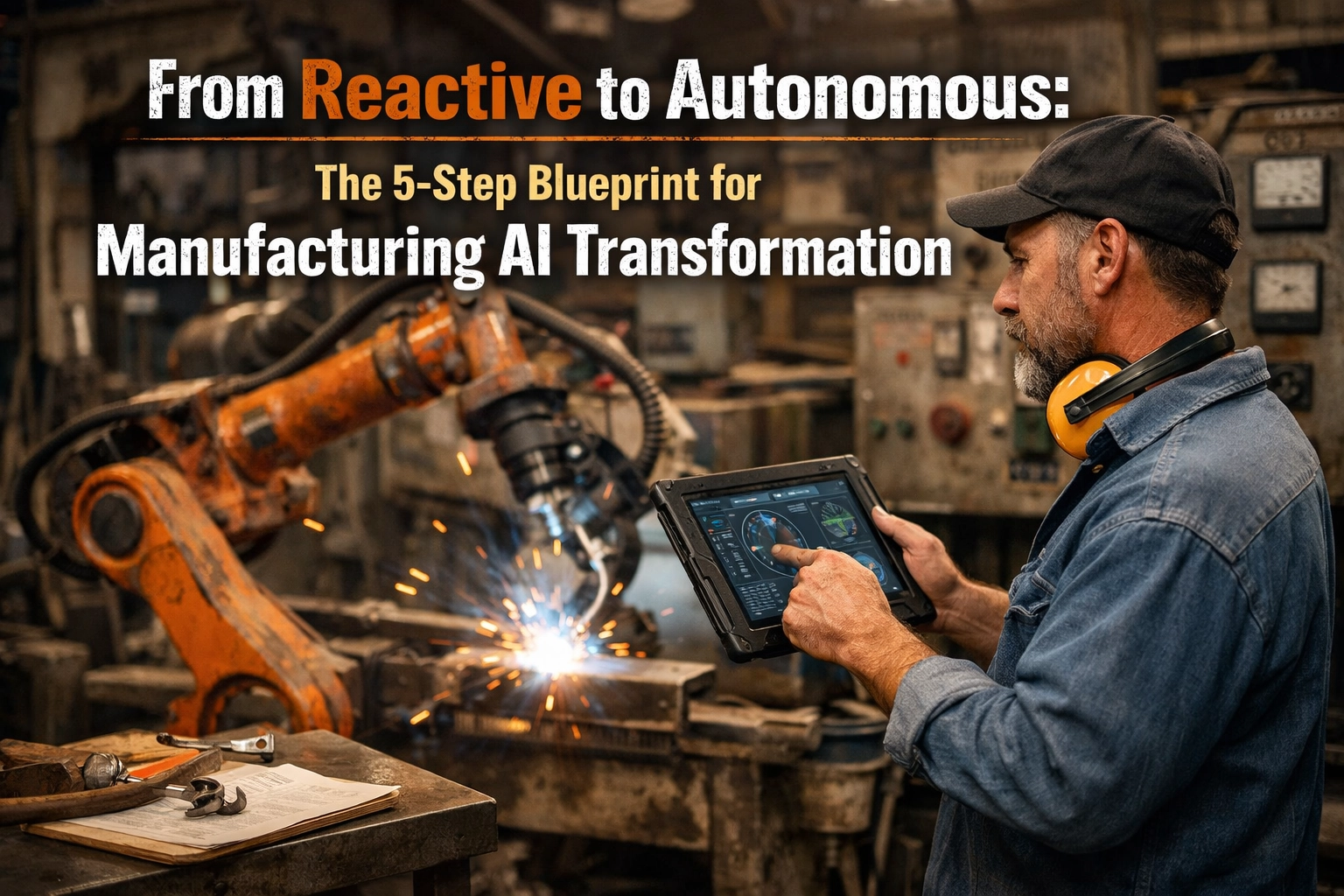
Your factory runs on reactive decisions. A machine breaks, you scramble for parts. A rush order arrives, you shuffle schedules. Quality issues surface downstream, you investigate after the damage is done. You're constantly putting out fires instead of preventing them.
The problem isn't your team's work ethic. It's the architecture of your operations. Manual decision-making creates lag time between problem detection and response. By the time you spot an issue, you've already lost hours of production, burned through overtime pay, and disappointed a customer.
Autonomous AI changes the equation completely. Instead of reacting to problems, your systems predict and prevent them. Instead of human managers juggling twenty variables, goal-oriented agents optimize production in real time based on machine performance, inventory levels, order priorities, and quality metrics simultaneously.
Over seventeen years building process optimization systems, we've seen the evolution from basic automation to truly autonomous operations. The manufacturers winning right now aren't just digitizing their workflows: they're deploying AI agents that own entire decision loops without human intervention.
This isn't theory. It's production-ready technology delivering measurable ROI across mid-market manufacturing. Here's the exact blueprint we use to transform reactive operations into autonomous systems.
Step 1: Map Your Current Bottlenecks and Decision Loops
You can't optimize what you don't measure. Before deploying any autonomous system, you need complete visibility into where decisions happen and where delays occur.
Start by documenting every manual decision point in your production flow. When does someone choose which order to prioritize? Who decides when to reorder materials? How do shift supervisors allocate labor when multiple jobs need attention?
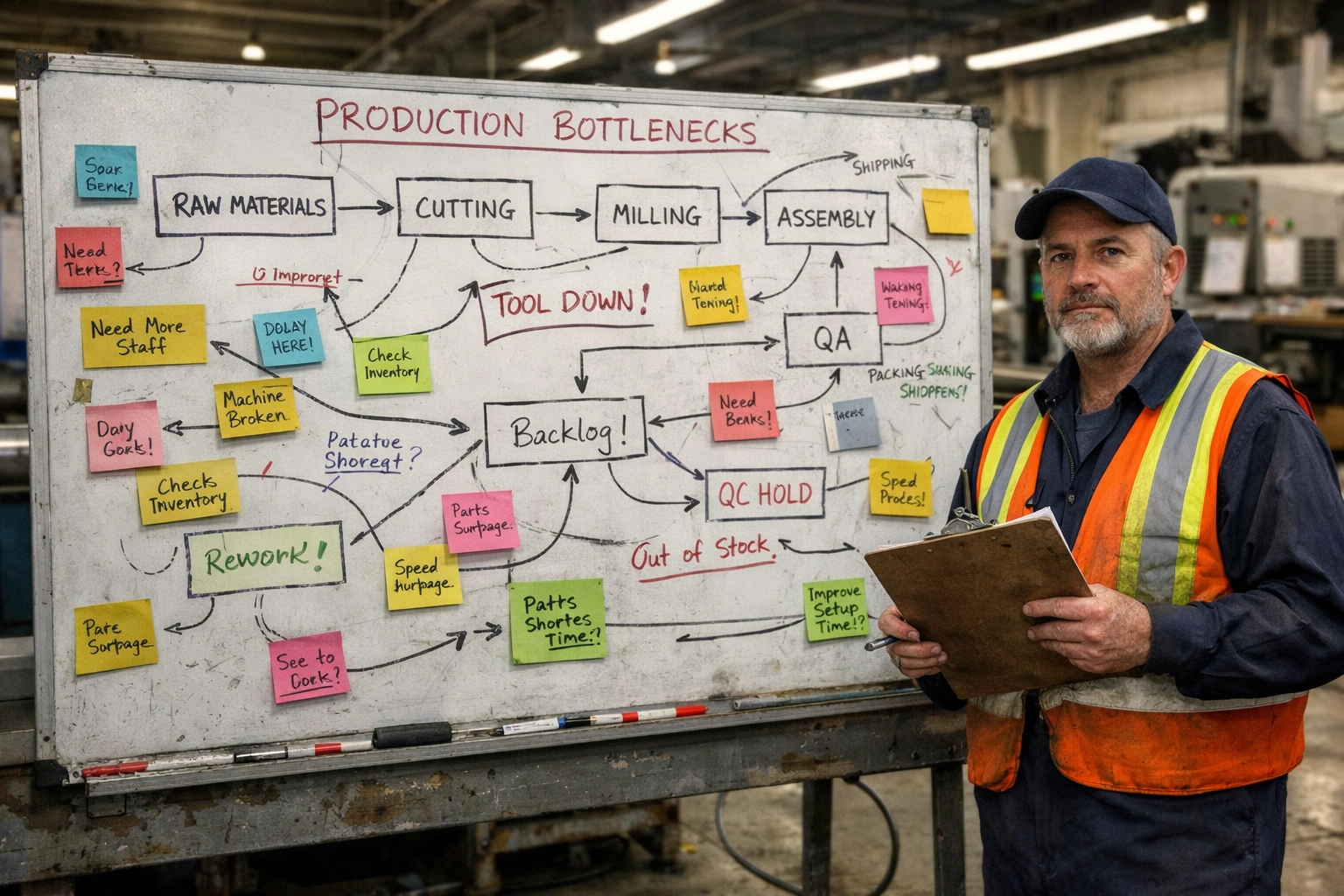
Most manufacturers discover they're making hundreds of optimization decisions daily based on incomplete information. Your production manager might prioritize Job A over Job B because it has an earlier ship date, not realizing Job B's materials expire in forty-eight hours or that Job A's customer has flexible delivery windows.
The old way: Tribal knowledge and gut instinct drive scheduling decisions.
The autonomous way: Every decision gets mapped, measured, and later optimized by AI agents with complete operational context.
Create a simple decision map. List every recurring choice your team makes, the information they use to make it, and the business impact when they get it wrong. This becomes your automation roadmap.
Step 2: Deploy Autonomous Monitoring Systems
Reactive operations fail because problems get detected too late. You need real-time visibility across your entire production environment before you can build autonomous decision-making on top of it.
Install sensor networks and data collection systems that track machine performance, inventory movement, quality metrics, and order status continuously. This isn't optional infrastructure: it's the foundation for every autonomous system you'll build.
The key is comprehensive data integration. Your ERP system knows what orders are active. Your quality control station knows defect rates. Your inventory system knows material availability. Your machine sensors know cycle times and vibration patterns. Autonomous agents need all of this data flowing together in real time.
We typically integrate:
- Machine sensor data (vibration, temperature, cycle time)
- Quality control metrics (defect rates, inspection results)
- Inventory levels (raw materials, WIP, finished goods)
- Order management data (ship dates, customer priorities)
- Labor scheduling (shift coverage, skill availability)
Once you have unified visibility, patterns emerge immediately. You'll spot correlation between machine temperature spikes and quality defects. You'll see how late material deliveries cascade into overtime costs. You'll quantify exactly how much downtime costs per hour for each production line.
Executive takeaway: You can't deploy autonomous agents without clean, integrated operational data. This step pays for itself in improved decision-making even before you add AI.
Step 3: Implement Predictive Maintenance Agents
Unplanned downtime is the single biggest profit killer in manufacturing. A critical machine failure during a rush order doesn't just cost repair time: it triggers overtime pay, expedited shipping, potential customer penalties, and opportunity cost from orders you can't fulfill.
Predictive maintenance agents eliminate surprise failures by continuously monitoring equipment health and predicting issues before they cause downtime.
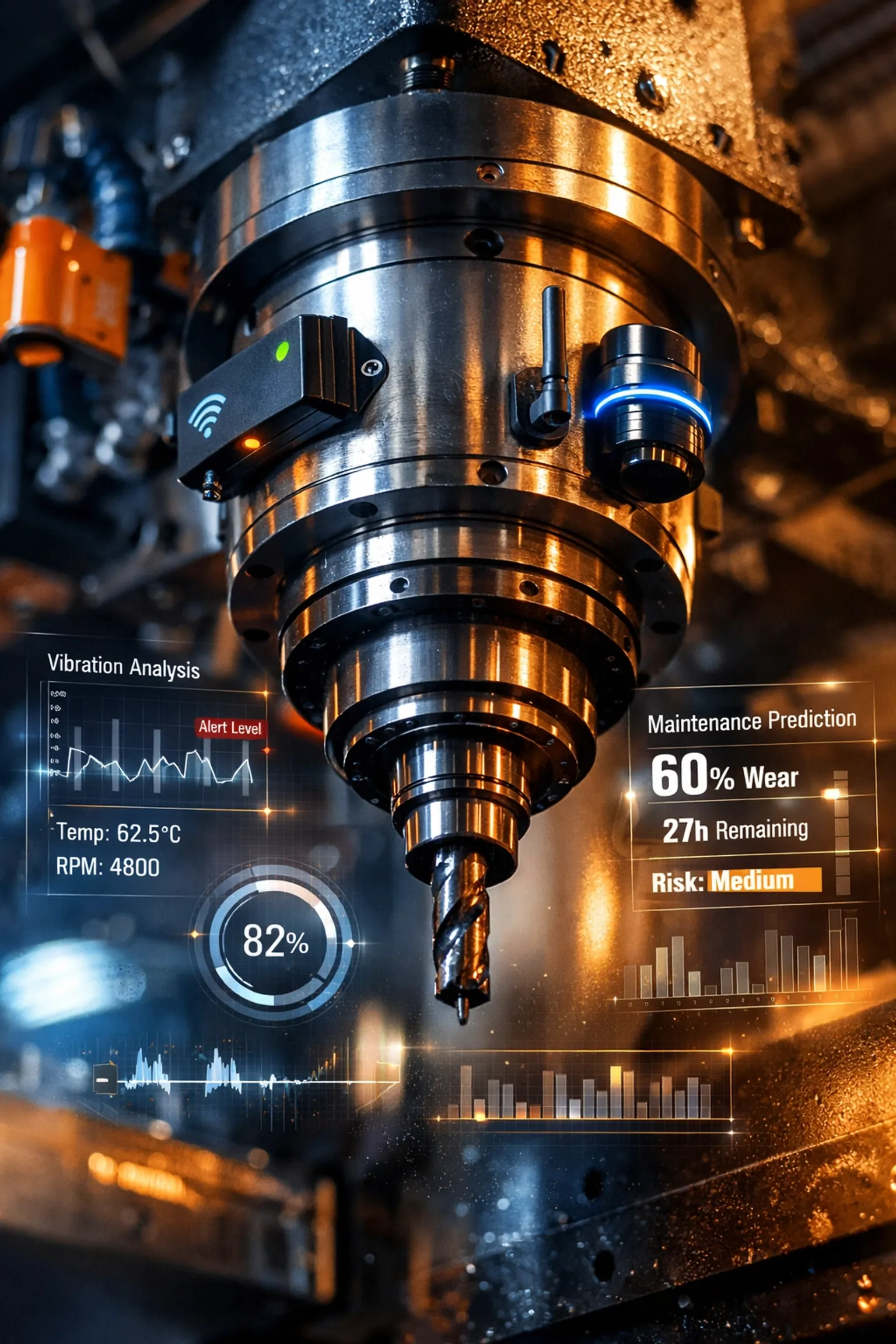
These aren't simple threshold alerts. Goal-oriented agents analyze vibration patterns, temperature trends, cycle time degradation, and historical failure data to predict when specific components will fail. They automatically schedule maintenance during planned downtime windows and trigger parts ordering before you need them.
One mid-sized CNC shop we worked with reduced unplanned downtime by 73% within six months. Their autonomous maintenance agent identified a gradual spindle bearing degradation that their operators couldn't detect manually. The system scheduled replacement during a weekend, ordered the part automatically, and avoided what would have been a three-day emergency shutdown during their busiest production month.
The business impact: Predictive maintenance typically delivers 20-30% reduction in maintenance costs and 40-60% reduction in unplanned downtime. For a factory with $10M annual revenue, that translates to $200K-$400K in annual savings.
Your predictive maintenance agent should:
- Monitor real-time sensor data from critical equipment
- Compare current performance against baseline and historical patterns
- Predict component failures 2-4 weeks before they occur
- Automatically schedule maintenance during optimal production windows
- Trigger parts ordering and technician scheduling autonomously
Step 4: Optimize Production Workflows with Decision Agents
This is where autonomous operations deliver exponential ROI. Once you have predictive systems running, you deploy agents that make real-time production decisions without human input.
Your scheduling agent doesn't just follow a static production plan. It continuously re-optimizes based on:
- Current machine availability and performance
- Real-time inventory levels and incoming deliveries
- Order priorities and customer flexibility
- Quality metrics and yield rates
- Labor availability and skill matching
When a machine goes down unexpectedly, your autonomous scheduler instantly reroutes affected jobs to available capacity, adjusts downstream schedules, and notifies affected customers of revised delivery dates. All of this happens in seconds, not hours.

Old way: Production manager spends 2-3 hours daily manually adjusting schedules in response to disruptions. By the time adjustments propagate through the system, more disruptions have occurred.
Autonomous way: Decision agents respond to disruptions in real time, optimizing across hundreds of variables simultaneously. Human managers focus on strategic decisions and customer relationships instead of tactical firefighting.
A job shop manufacturer we work with deployed autonomous scheduling agents that increased on-time delivery from 67% to 94% while simultaneously reducing overtime costs by 41%. Their agents optimize production mix every fifteen minutes based on current conditions.
The competitive advantage compounds over time. While your competitors spend hours recovering from disruptions, your autonomous systems have already adjusted and moved on. You're fulfilling more orders with the same equipment and headcount.
Step 5: Scale to Self-Optimizing Operations
The final step is deploying agents that don't just execute decisions: they continuously improve your operational performance through reinforcement learning.
Self-optimizing agents track the outcomes of every decision they make. When they adjust a production schedule, they measure the impact on delivery performance, quality rates, and costs. Over time, they learn which optimization strategies work best for your specific operation.
This is where autonomous operations diverge completely from traditional automation. Static automation follows fixed rules. Autonomous agents learn and adapt.
Your self-optimizing supply chain agent might discover that ordering materials from Supplier B with a 10% cost premium actually reduces total cost because their reliability eliminates expensive production delays. A human purchasing manager focused on unit price would never make that connection.
Your quality optimization agent might identify subtle correlations between ambient humidity, machine temperature, and defect rates that no human operator would notice. It automatically adjusts process parameters to maintain quality across changing environmental conditions.
The bottom line: Self-optimizing systems compound improvements over time. Month one delivers 15% efficiency gains. Month twelve delivers 40% gains because your agents have learned from thousands of decisions and continuously refined their optimization strategies.
The Manufacturing Transformation Timeline
Most manufacturers achieve measurable ROI within 90-120 days of starting this blueprint. Predictive maintenance delivers immediate savings. Autonomous scheduling shows results within weeks. Self-optimization compounds benefits over quarters and years.
The manufacturers waiting on the sidelines aren't being cautious: they're falling behind competitors who are already operating with autonomous systems. Every quarter you run reactive operations is a quarter your competition runs autonomous, learning systems that get smarter daily.
At Bafmin, we've spent seventeen years building process optimization systems for complex operations. We know manufacturing isn't a clean software environment: it's messy, physical, and full of variables that textbook AI doesn't handle well. Our agents are built for real factory floors, not theoretical ideal states.
We start with your highest-pain bottleneck, deploy a focused autonomous solution, measure the impact, and scale from there. No massive upfront investment. No rip-and-replace of existing systems. Just measurable improvement in weeks, not years.
If you're ready to move from reactive firefighting to autonomous optimization, we should talk. Visit bafmin.com/contact to start building your transformation roadmap today.