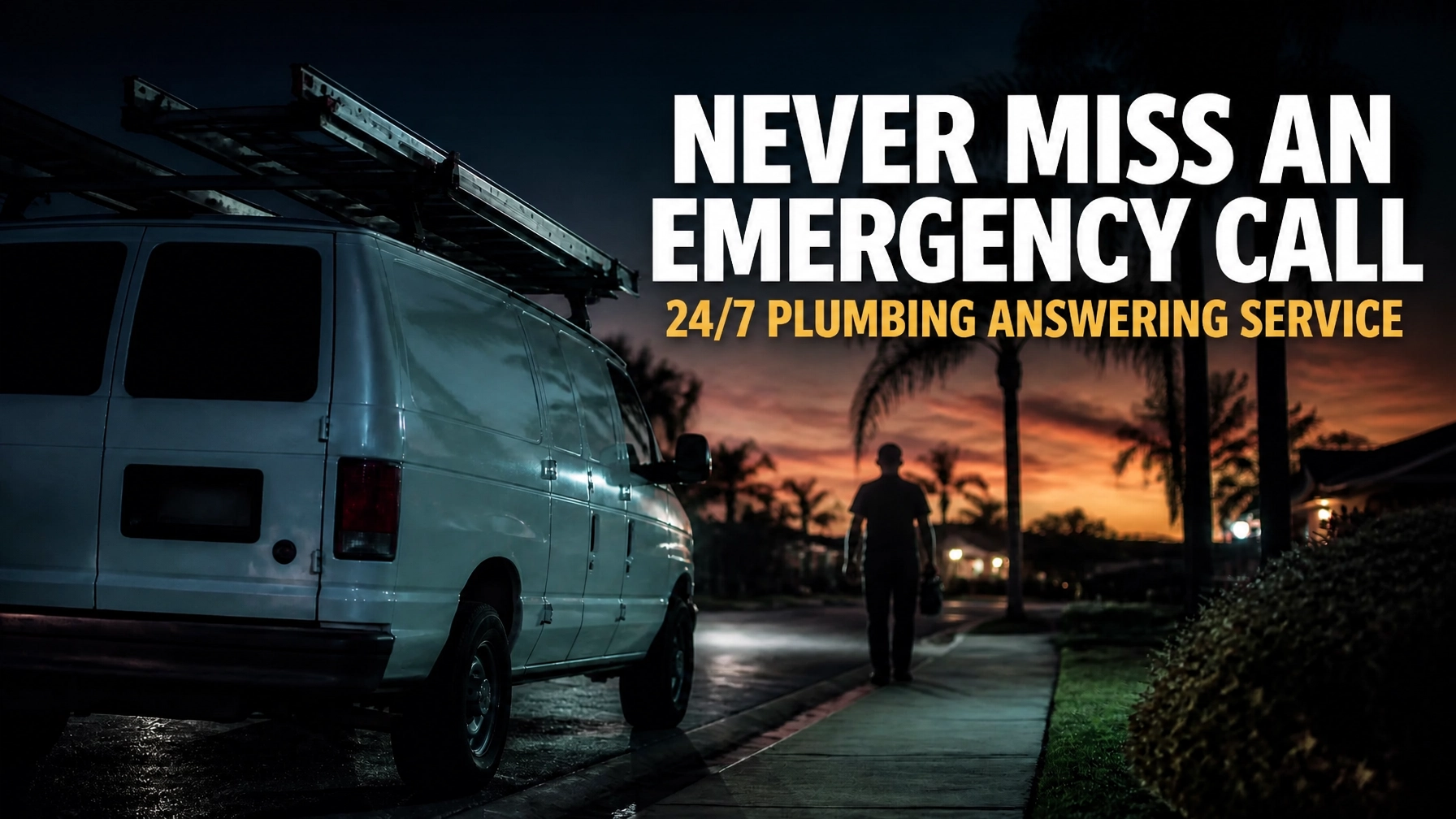
TL;DR: A burst pipe, failed water heater, or main line break does not wait for business hours. If your Florida plumbing company sends an after-hours caller to voicemail, that homeowner can call the next plumber on Google within seconds. A modern plumbing answering service answers immediately, identifies emergency conditions, collects the address and job details, alerts the right technician, and books the call without forcing you to stop working. The best solution combines 24/7 coverage, plumbing-specific triage, dispatch integration, transparent pricing, and human escalation when the situation requires judgment.
A burst pipe starts at 11:47 p.m.
A water heater fails during a holiday weekend.
A main line breaks while a homeowner in Tampa is getting ready for bed.
The homeowner calls your plumbing company. You are already on another job, driving, sleeping, or helping your family. The call goes to voicemail.
Then the homeowner searches Google again and calls the next plumber.
You did not only lose one phone call. You lost the emergency service fee, the repair, the potential replacement work, and the chance to keep that customer for future plumbing needs.
The stakes are real.
Plumbing Is an Emergency-Driven Business
Plumbing calls are different from many other home-service calls because the customer often cannot wait.
A homeowner may postpone a landscaping estimate or compare roofing quotes for a few days. They usually do not postpone a flooded bathroom, sewage backup, or failed water heater.
That urgency changes the economics of your phone.
Your after-hours line is not just a customer-service channel. It is a revenue channel connected directly to your Google Business Profile, Local Services Ads, website, referrals, and repeat customers.
Emergency plumbing customers are even less patient.
Meanwhile, competitors across Florida are investing in faster intake, automated follow-up, and 24/7 call coverage.
Old Way vs. New Way: What Happens After the Phone Rings?
The Old Way: A Message-Taking Answering Service
Traditional answering services can keep a call from going completely unanswered. That is better than voicemail, but message-taking alone may not be enough for emergency plumbing.
The typical process looks like this:
- The caller reaches an agent following a general script.
- The agent writes down the caller's name and phone number.
- Plumbing terms, street names, or equipment details may be misspelled.
- The message is sent to your office or on-call technician.
- Someone calls the homeowner back later: sometimes at 7 a.m.
- Your business may pay additional per-minute or per-call charges.
This model creates a delay between the problem and the response.
It also leaves your technician with incomplete context. "Customer has a leak" is not the same as knowing that water is actively spreading through the ceiling, the main shutoff is inaccessible, and the property is a two-story home in Sarasota.
Traditional services are not automatically bad. A capable human answering team can be valuable. The problem is that a generic message-taker may not be structured to qualify, prioritize, dispatch, and book plumbing work in real time.
The New Way: An AI-Powered Plumbing Answering Service
A modern AI-powered plumbing answering service is built around the full intake workflow.
It can:
- Answer inbound calls immediately, day or night
- Identify whether the call is an emergency, urgent repair, maintenance request, or estimate
- Ask plumbing-specific questions
- Capture the complete service address
- Identify whether water is actively leaking or shut off
- Ask about water heaters, sewer backups, gas odors, flooding, and access conditions
- Apply your service area, pricing, and availability rules
- Notify or dispatch the correct on-call technician
- Book appointments directly into your scheduling system
- Send confirmation messages and call summaries
- Escalate serious or unusual situations to a human
The difference is operational.
The old model records a message.
The new model moves the job forward.
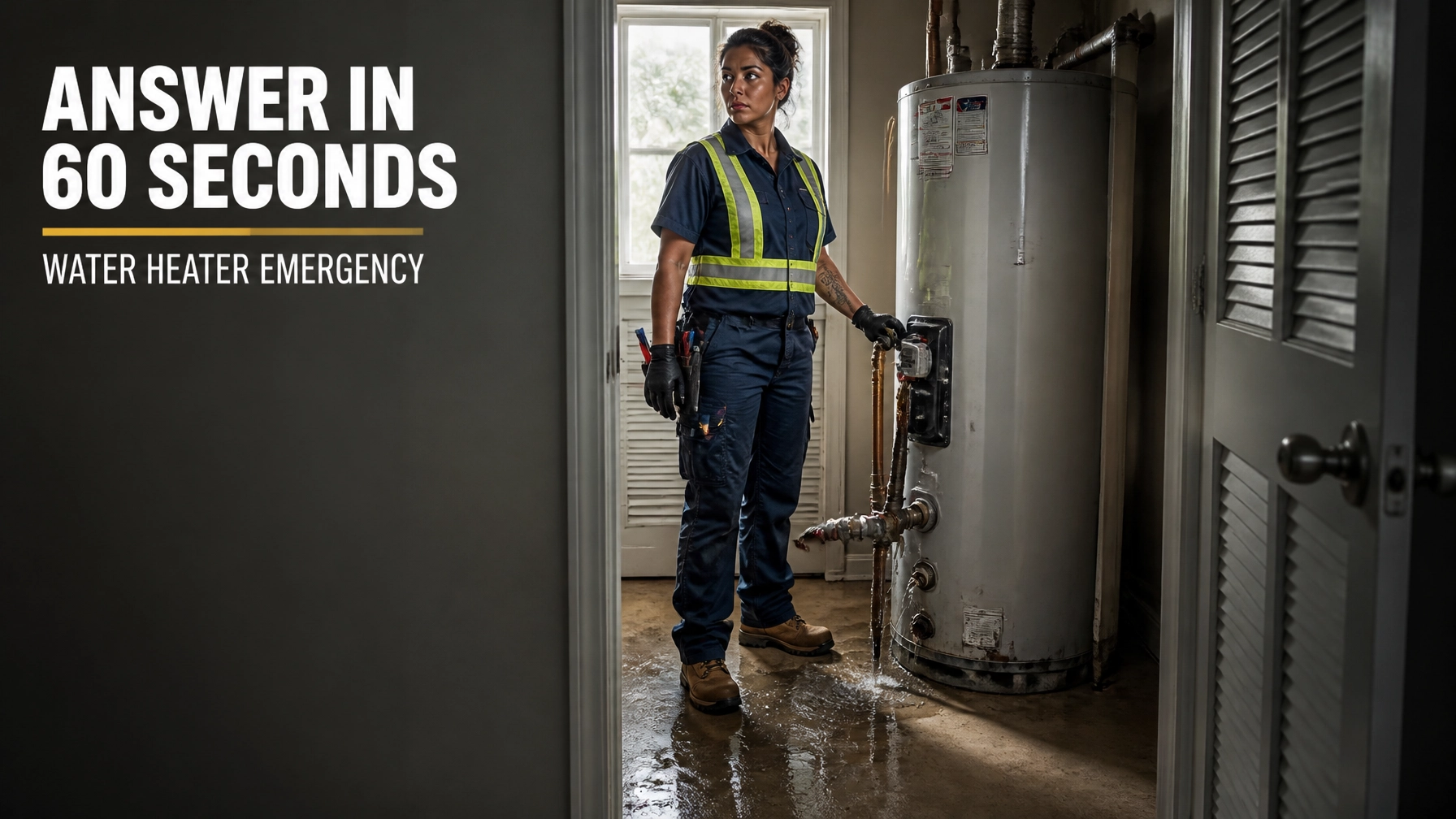
What a Plumbing AI Agent Should Ask
A plumbing answering service should not pretend to diagnose a problem remotely. It should collect the information your team needs to respond safely and efficiently.
For an emergency call, the system may ask:
- What is happening right now?
- Is water actively flowing or spreading?
- Have you located the main water shutoff?
- Is the issue connected to a water heater, toilet, drain, sewer line, or fixture?
- Is there sewage, contaminated water, or structural damage?
- Does the property have access restrictions, a gate, or a tenant contact?
- What is the complete service address?
- Is anyone in danger?
If the caller reports a gas odor, electrical hazard, fire, or immediate threat to life, the system should follow your approved safety escalation process. It should not improvise technical advice.
The goal is not to replace your licensed plumber's judgment.
The goal is to make sure the licensed plumber receives the right call, the right details, and the right priority without wasting time on basic intake.
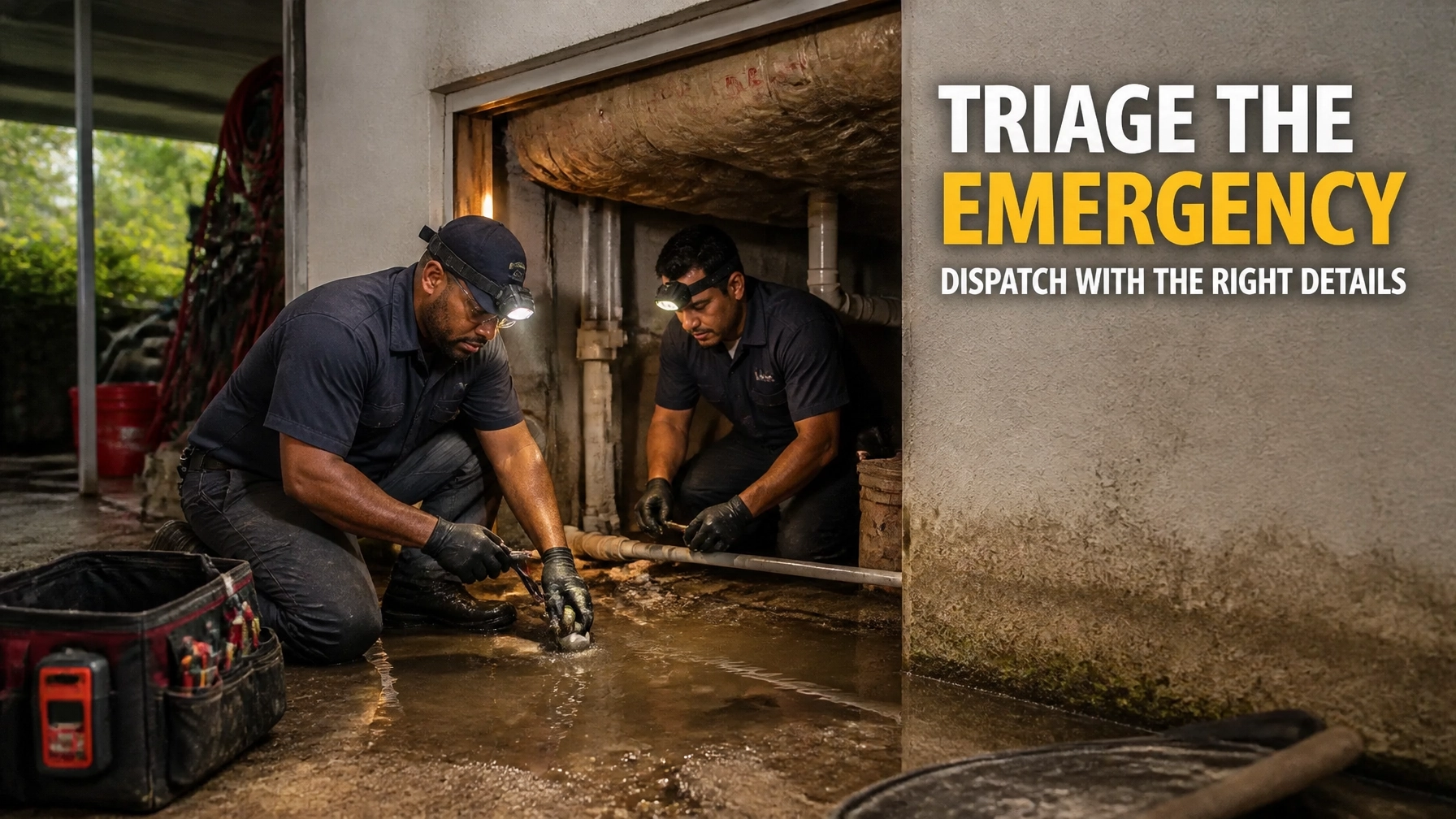
Old Way vs. New Way: Dispatch and Customer Experience
Old Way
- A technician receives a vague voicemail
- The address is incomplete or incorrect
- The customer calls again for an update
- The office tries to reach the on-call plumber
- A competitor answers and dispatches first
- Your team starts the next morning behind
New Way
- The call is answered immediately
- The emergency is categorized by severity
- The address and access details are verified
- The on-call technician receives a structured summary
- The customer receives a clear next step
- The job is booked or escalated according to your rules
- Your office sees the call history and outcome
This matters in Tampa, Orlando, Jacksonville, Miami, Sarasota, and every Florida market where homeowners can find several competing plumbers in seconds.
A faster response does not guarantee that you win every job. It gives you a fair chance to compete for the job before the customer moves on.
Exec takeaway: For plumbing companies, response time is part of the service. If your intake process is slow, your customer may never reach your technician.
What to Look for in a Plumbing Answering Service
Commercial-intent searches require a practical buying guide. Not every answering service is designed for plumbing. Evaluate the system against these requirements.
1. 24/7 coverage
Emergency plumbing does not follow office hours. Confirm that coverage includes nights, weekends, holidays, storms, and high-call-volume periods.
Ask whether the service has a backup process if the primary system is unavailable.
2. Plumbing-specific context
A generic receptionist script is not enough. The system should understand the difference between:
- A dripping faucet and an active supply-line leak
- A clogged sink and a sewage backup
- A routine water-heater estimate and a leaking tank
- A slow drain and a broken main line
It should also follow your actual service area, job types, emergency fees, warranties, and availability rules.
3. Instant response
A call that rings several times before an answer is still a risk. Ask how quickly calls are answered and whether the system can handle multiple callers at once.
The target should be immediate engagement, not a promise to return a call later.
4. Dispatch and scheduling integration
A call summary sent by email may not be enough. Look for connections to the tools you already use for scheduling, dispatch, CRM, or field-service management.
The system should reduce duplicate entry and prevent double-booking.
5. Transparent pricing
Ask how billing works.
Some traditional services charge by the minute, by the call, or by special after-hours tiers. An inexpensive base rate can become expensive during a storm or a high-volume emergency week.
Request clear answers about:
- Included call volume
- After-hours fees
- Per-minute charges
- Setup costs
- Dispatch or booking fees
- Cancellation terms
- Overage pricing
6. Human escalation
AI should handle routine intake and structured triage. It should also know when to involve a human.
Ask how the system escalates:
- Gas odor reports
- Sewage or contaminated-water events
- Flooding with electrical risk
- Angry or distressed callers
- Commercial accounts
- Warranty issues
- Situations outside your service rules
The best system does not force every call through automation.
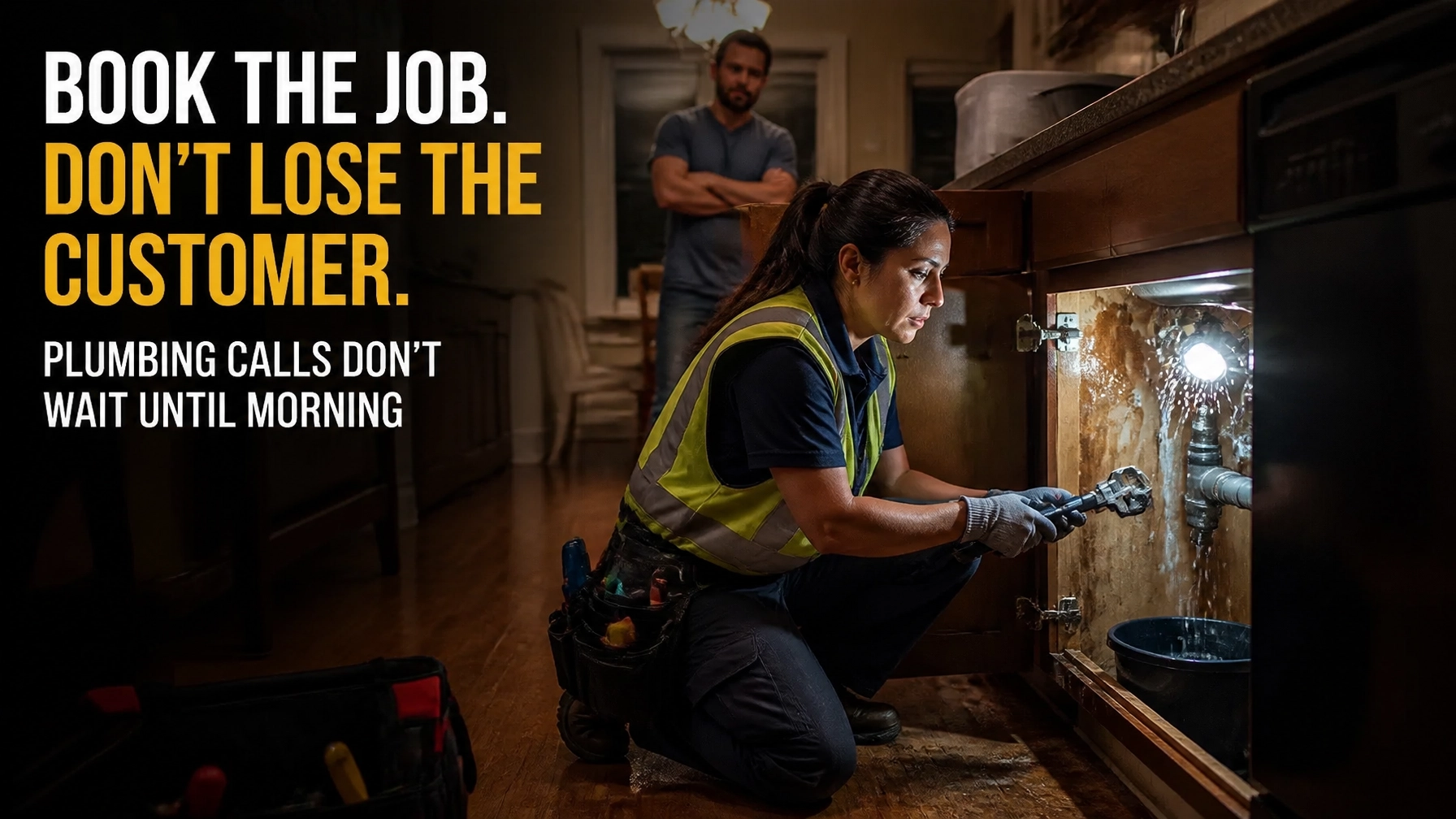
How to Implement a Plumbing Answering Service Without Creating More Work
Start with your highest-value call paths.
Document what should happen when a customer calls about:
- Active water leaks
- Water-heater failures
- Sewer backups
- Main line breaks
- Drain cleaning
- Fixture repairs
- Repiping or replacement estimates
- Commercial plumbing emergencies
Then define your service area, emergency fees, technician rotation, booking windows, escalation rules, and customer messaging.
Run test calls from different Florida locations. Try a Tampa burst pipe scenario, an Orlando water-heater failure, a Jacksonville sewer backup, and a Miami after-hours leak.
Listen for one thing: does the system produce a useful job, or merely a message?
Bafmin helps Florida trade companies identify revenue leaks and implement AI automation systems that capture calls, qualify opportunities, schedule work, and support follow-up. You can also use the Revenue Leak Score to examine where missed calls and slow response may be costing your business.
The Bottom Line
A voicemail greeting does not protect an emergency plumbing lead.
The homeowner with a burst pipe wants a response now. The plumber who answers first, gathers the right details, and provides a clear next step gets the opportunity to earn the job.
A strong plumbing answering service should do more than take messages. It should answer 24/7, understand plumbing situations, separate emergencies from routine requests, verify the address, alert the right technician, book the work, and escalate when human judgment is necessary.
Your competitors are already improving how quickly they respond.
Do not wait until the next after-hours call exposes the gap. Contact Bafmin to evaluate how an autonomous AI workforce could support your Florida plumbing operation without keeping you chained to the phone.
Sources
- The Short Life of Online Sales Leads : Harvard Business Review
- Lead Response Management research : InsideSales
- Home-service response-time benchmark discussion : PipelineOn
- Bafmin AI Automation Services
- Bafmin Revenue Leak Score
Sources and Scope
Harvard Business Review's research on online sales leads suggests prompt follow-up can matter in other industries. It does not establish a conversion benchmark for Florida plumbing businesses or an AI answering product.
The NIST AI Risk Management Framework discusses human oversight and the context AI can miss. Your team should define safety escalation and retain technical judgment.