Your business adopted an AI copilot last year. It answers questions. It drafts emails. It summarizes documents. Your team likes it.
But revenue hasn't changed. Operational bottlenecks remain. Decision cycles still take too long.
The problem isn't that your copilot is broken. The problem is that copilots were never designed to drive outcomes. They assist. They suggest. They respond. They don't act.
In 2026, the gap between conversational AI tools and goal-oriented agents is widening fast. Copilots help humans work faster. Agents take ownership of entire workflows, make decisions autonomously, and optimize toward measurable business objectives without waiting for a prompt.
If your AI strategy still centers on chatbots and copilots, you're solving yesterday's problem.
The Copilot Ceiling: Why Conversational AI Stops Short
AI copilots—ChatGPT, Microsoft Copilot, Google Duet—changed how knowledge workers interact with software. They eliminated blank-page paralysis. They made information retrieval conversational. They reduced repetitive writing tasks.
But copilots are reactive by design. They wait for you to ask. They don't monitor systems, track KPIs, or initiate actions based on changing conditions. They assist individual contributors one query at a time.

Here's what copilots can't do:
- Monitor a sales pipeline and autonomously re-prioritize leads based on engagement velocity and deal size.
- Detect anomalies in financial transactions and execute fraud prevention protocols without human approval.
- Optimize supply chain logistics in real time as fuel costs, weather patterns, and supplier lead times shift.
- Rebalance investment portfolios dynamically as market conditions change throughout the trading day.
- Predict equipment failure and automatically schedule maintenance before downtime impacts production.
Copilots require a human in the loop for every decision. Goal-oriented agents close the loop themselves.
The difference isn't incremental. It's architectural.
What Goal-Oriented Agents Actually Do
Goal-based agents are built around intentional planning, real-time adaptability, and multi-objective optimization. They don't just generate responses. They execute complex workflows autonomously, course-correct as conditions change, and measure success against defined business outcomes.
Three core capabilities separate agents from copilots:
1. Intentional Planning
Agents weigh every action against a larger strategic objective. Instead of answering "What should I do next?" they autonomously determine the most effective sequence of actions to reach a target state—whether that's reducing claims processing time, improving customer retention, or minimizing logistics costs.
2. Real-Time Adaptability
Unlike rule-based automation (which breaks when conditions change) or copilots (which require new prompts for every scenario shift), agents recalibrate continuously. If a supplier shipment is delayed, an agent adjusts production schedules, reallocates inventory, and notifies downstream stakeholders—without escalating to a human unless thresholds are breached.
3. Multi-Objective Optimization
Business decisions rarely optimize for a single variable. Agents balance competing priorities simultaneously: minimize cost and maintain quality and meet delivery deadlines and stay compliant with regulatory requirements. They evaluate trade-offs and execute decisions that maximize overall organizational value, not just isolated metrics.
Where Agents Deliver Measurable ROI
The industries seeing the highest adoption—HR, finance, healthcare, IT, manufacturing, and retail—are data-intensive environments where speed, accuracy, and consistency directly impact the bottom line.
Here's where the ROI shows up:
HR and recruiting: 30–70% reduction in recruiting overhead through autonomous candidate sourcing, resume screening, interview scheduling, and offer negotiation optimization.
Finance and insurance: 40–60% faster claims processing with reduced error rates, plus fraud detection systems that minimize false positives while catching sophisticated schemes.
Supply chain and logistics: Dynamic route optimization, demand forecasting, and predictive maintenance that delivers $2M+ in annual savings for mid-sized manufacturers.
Healthcare operations: Autonomous patient scheduling, prior authorization workflows, and compliance evidence collection that reduce administrative burden and audit risk.
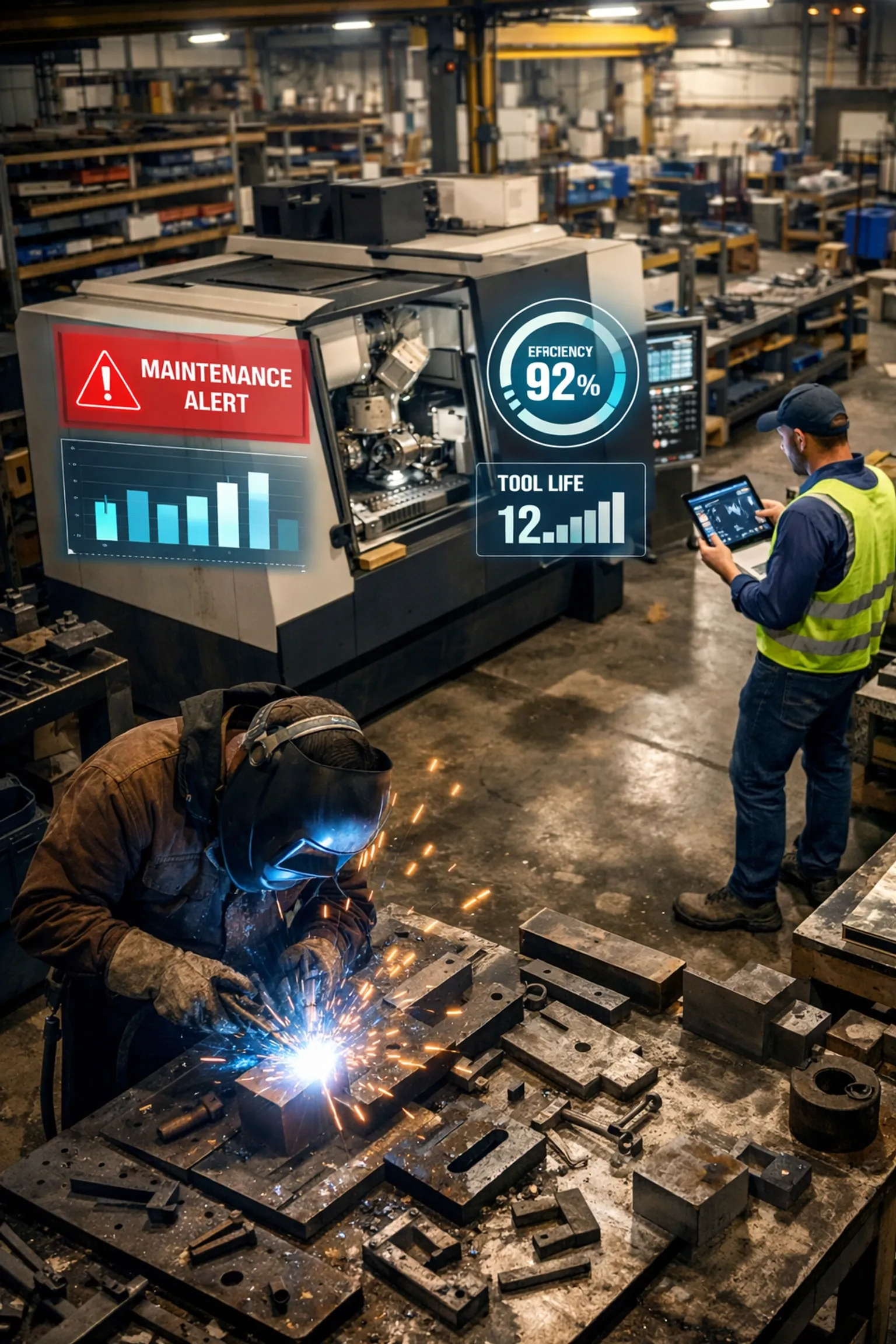
These aren't pilot projects. They're production systems running 24/7, making thousands of decisions per day, and learning from outcomes to improve performance over time.
The Gap Your Competitors Are Exploiting
While you're asking your copilot to "summarize this report," your competitors are deploying agents that:
- Monitor customer engagement signals across every touchpoint and autonomously trigger personalized retention campaigns.
- Analyze pricing elasticity in real time and adjust rates dynamically to maximize margin without sacrificing conversion.
- Identify process inefficiencies across departments and recommend (or implement) workflow changes that compound productivity gains.
The velocity gap between human-in-the-loop AI and autonomous AI is not linear. It's exponential.
Static rules break under complexity. Copilots require constant supervision. Agents learn, adapt, and scale without adding headcount.
When Copilots Make Sense (And When They Don't)
Copilots still have a role. They're effective for:
- Tier-1 customer support: Conversational AI handles FAQs, account lookups, and basic troubleshooting—freeing human agents for complex escalations.
- Employee self-service: Internal chatbots answer HR policy questions, IT support requests, and onboarding queries.
- Content drafting and research: Copilots accelerate writing, brainstorming, and information synthesis for knowledge workers.
But if your goal is operational transformation—reducing cycle times, improving decision quality, eliminating manual handoffs, or scaling without proportional cost increases—copilots won't get you there.
You need systems that act, not just assist.

Building for Autonomous Intelligence: What It Takes
Deploying goal-oriented agents isn't a chatbot integration. It's a shift in how you architect decision-making across your organization.
Here's what successful implementations prioritize:
Define measurable objectives first. Agents optimize toward goals. If you can't articulate what success looks like in quantifiable terms (reduce processing time by X%, improve accuracy to Y%, increase conversion by Z%), the agent has no target to pursue.
Start with high-volume, data-rich workflows. Agents learn from repetition. The best early candidates are processes that run frequently, have clear inputs/outputs, and generate structured data—claims adjudication, inventory replenishment, lead scoring, invoice reconciliation.
Build feedback loops into the system. Autonomous doesn't mean unmonitored. Agents improve through reinforcement learning—they need outcome data (did the prediction match reality? did the action achieve the goal?) to refine their models over time.
Integrate, don't isolate. Agents are most effective when they have access to real-time data across systems—CRM, ERP, finance, operations, compliance. Siloed agents make suboptimal decisions because they lack context.
Establish governance and oversight thresholds. Autonomy doesn't mean zero human involvement. Define when agents should escalate decisions (high financial risk, regulatory implications, reputational sensitivity) and when they should execute independently.
The Bafmin Approach: Agentic AI That Drives Growth
At Bafmin, we build goal-oriented agents designed for autonomous process optimization, intelligent decision support, and adaptive learning. Our solutions don't just answer questions—they identify opportunities, execute workflows, and measure impact across your organization.
We work with startups scaling rapidly, SMBs eliminating operational bottlenecks, and enterprises modernizing legacy decision-making systems. The common thread: leaders who recognize that AI's value isn't in making individuals more productive, but in making entire organizations more intelligent.

Our approach:
Map decision flows, not just processes. We identify where decisions create delays, where human judgment is inconsistent, and where better data access would improve outcomes.
Deploy agents that learn from your operations. Autonomous systems that adapt to your unique workflows, customer behaviors, and market conditions—not generic tools that require constant reconfiguration.
Measure org-wide impact, not task-level efficiency. We track KPIs that matter: cycle time reduction, revenue per employee, customer lifetime value, compliance risk scores—not just "time saved on email."
Build for continuous improvement. Agents don't plateau. As they process more data and encounter more scenarios, their decision quality improves—creating compounding returns over time.
What Happens If You Wait
The copilot era was a stepping stone. It proved that AI could integrate into daily workflows without breaking existing systems. It built user comfort with conversational interfaces.
But the competitive advantage has already shifted to autonomous execution. Companies deploying goal-oriented agents today are building muscle memory in AI-driven decision-making, refining their data infrastructure, and accumulating the training data that makes agents smarter faster.
Every quarter you spend optimizing copilot prompts is a quarter your competitors spend optimizing business outcomes.
The question isn't whether to adopt agentic AI. The question is whether you'll lead the transition or scramble to catch up once the gap becomes too wide to close.
Ready to Move Beyond Chatbots?
If your business is ready to deploy AI that drives measurable growth—not just productivity theater—let's talk. Bafmin builds autonomous AI solutions for organizations that compete on speed, precision, and adaptability.
We'll assess your highest-impact workflows, design goal-oriented agents tailored to your operations, and implement systems that learn and improve as your business scales.
Explore our AI automation services or see how agentic AI is reshaping industries in 2026.