You missed another call yesterday.
It came in at 2:47 PM while you were elbow-deep in a repair job. By the time you saw it at 5:30 PM and called back, they'd already booked someone else. That lead was worth somewhere between $350 and $1,500 in St. Pete's current market.
Now multiply that by the number of times it happens each month.
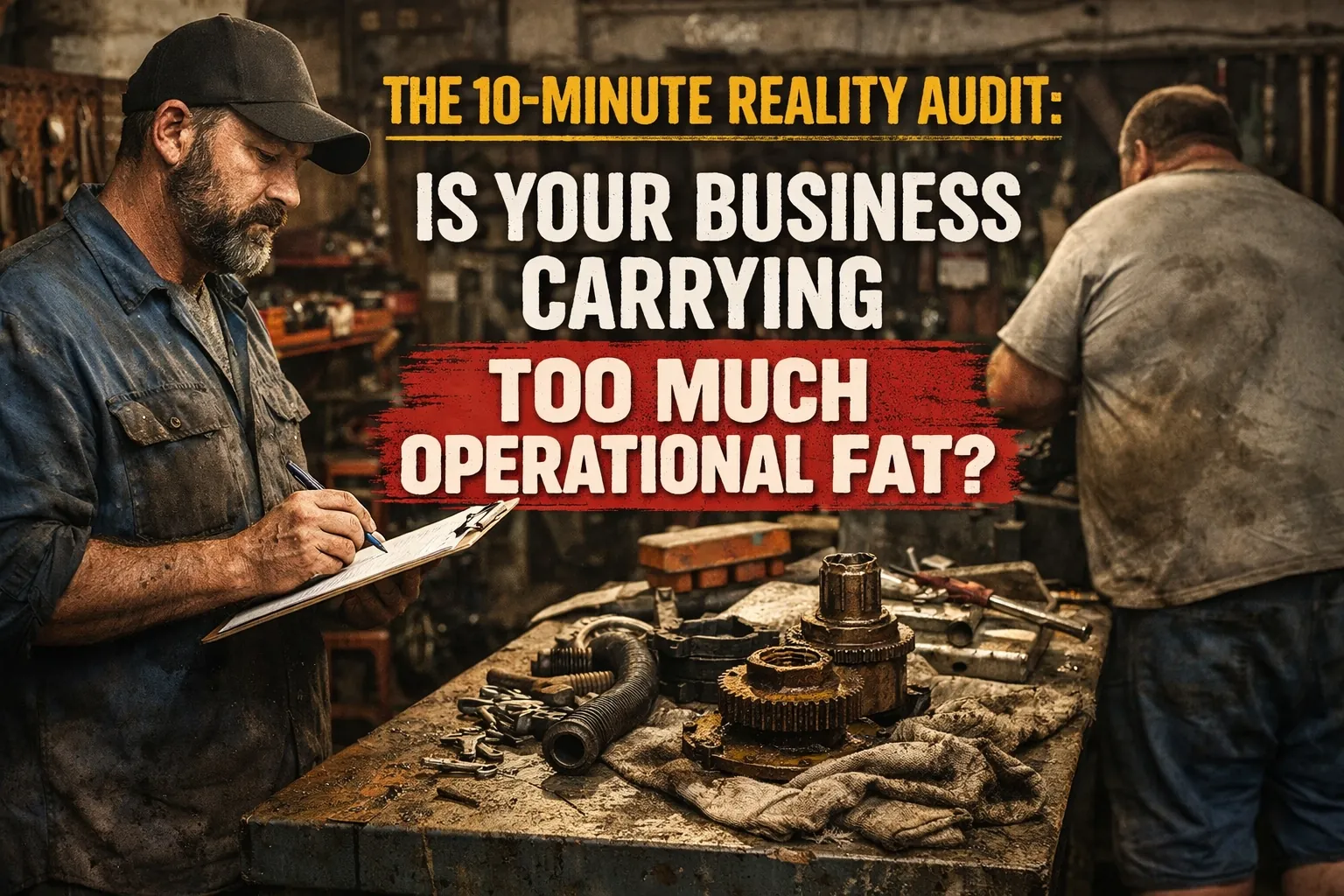
Most Florida trades businesses are carrying operational fat they don't even realize is there. Not literal weight, we're talking about the bloated, slow processes that eat your time, kill your margins, and hand leads to your faster competitors on a silver platter.
Here's the reality: your business might be profitable, but it's probably not lean. And in 2026, lean businesses are eating everyone else's lunch.
What Operational Fat Actually Looks Like
Operational fat isn't laziness. It's the accumulation of manual tasks, response delays, and administrative drag that felt manageable when you had three clients but now consumes half your day.

The inbox anchor. You spend two hours every morning responding to "Are you available?" and "What's your rate?" messages. These aren't strategic conversations. They're data entry disguised as customer service.
The paperwork bloat. Your techs finish a 10-hour shift, then spend another 45 minutes handwriting tickets and manually entering data into your CRM. That's 45 minutes of billable time you're bleeding every single day.
The ghost lead. You find an inquiry from three days ago that never got a response because it landed in your spam folder, or came through Facebook when you weren't checking, or arrived during that emergency job that ran until midnight.
The double-entry drag. You enter the same customer information into your scheduling software, then your CRM, then your invoicing system. Three times. Every single client.
These aren't isolated problems. They're symptoms of a business model built for 2015 trying to compete in 2026.
The Real Cost of Decision Lag
In the trades, speed isn't just convenient, it's the difference between a booked job and a lost opportunity.
Decision lag is the time between when a customer reaches out and when they get an actual response. Not an automated "We'll get back to you" message. A real answer that moves them toward booking.
Here's the math Florida trades businesses need to face: if your average decision lag is over five minutes, you're operating with high body fat. If it's over thirty minutes, you're losing jobs to the guy who answered first.
The stakes are real.
A missed HVAC call in Tampa during summer? That's a $1,200 installation you just handed to your competitor. A plumbing emergency that goes to voicemail? That's a $500 service call walking out the door. A roofing inquiry that sits unanswered for six hours? That's a $4,000 project you'll never even quote.
In St. Pete alone, the average trades lead is worth $350 to $1,500 depending on the job type. One missed call per day adds up to over $10,000 per month in lost revenue. And most businesses are missing more than one.
The bottom line: Decision lag is expensive fat your business can't afford to carry.
The 10-Minute Reality Audit
Grab a piece of paper and draw two columns. Label the left side "Needle Movers" and the right side "Noise."
Now think about yesterday. Walk through your actual day: not the idealized version where you got everything done, but the messy, interrupt-filled reality of running a trades business in Florida.
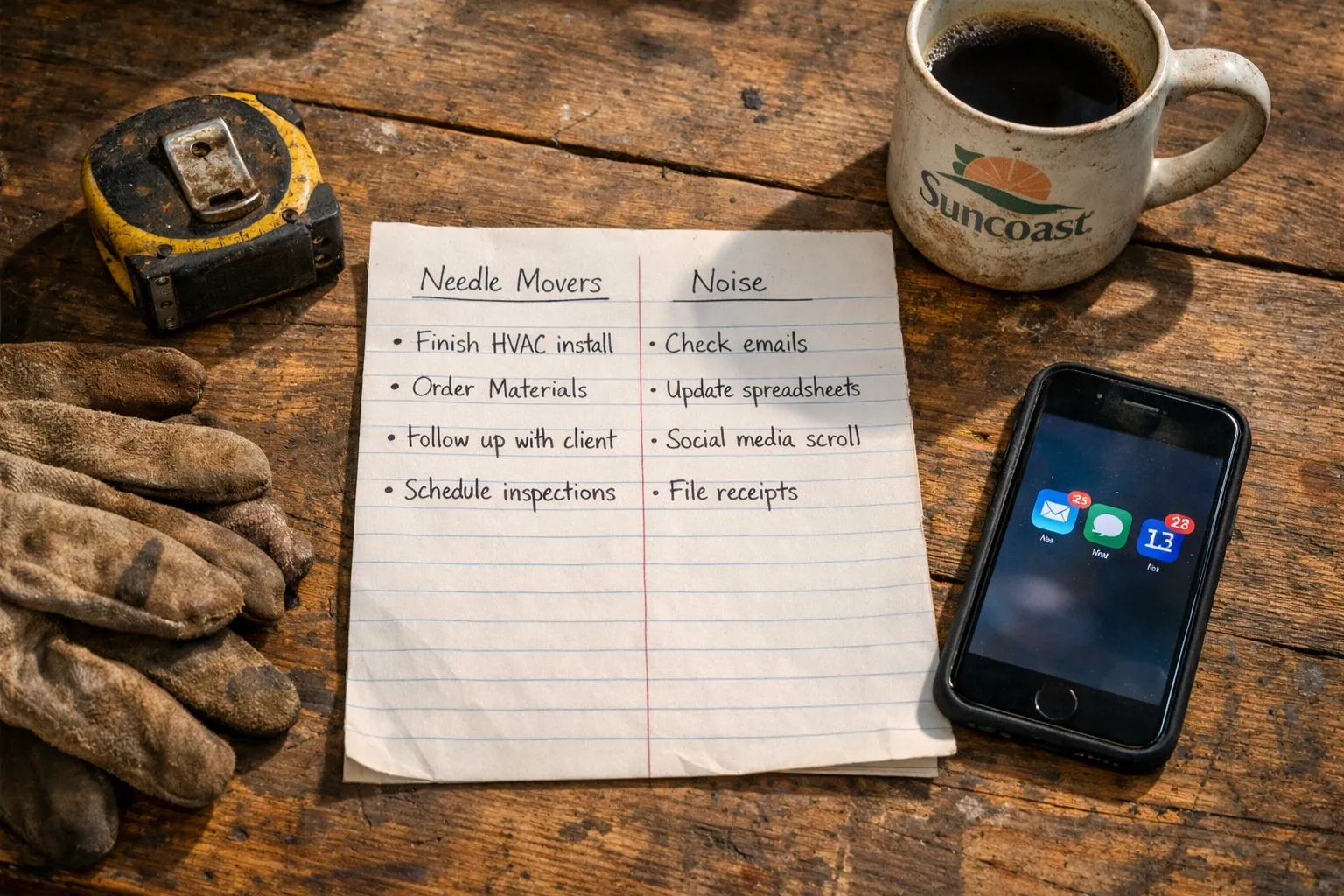
Needle Movers are activities that directly generate revenue or build your business. Installing systems. Closing sales calls. Training a new tech. Quoting high-value jobs. Fixing the thing that actually gets you paid.
Noise is everything else. Emails that could've been handled by a template. Scheduling calls that should've been automated. Data entry that could've been eliminated. Meetings that accomplished nothing. The thirty-minute conversation with a vendor that started as a "quick question."
Be brutally honest. Write down how much time you actually spent in each column yesterday.
If more than 20% of your day went to noise, your business is carrying too much operational fat. And here's the uncomfortable truth most trades owners don't want to admit: you're probably spending closer to 50% on noise.
That's not a moral failing. It's a systems problem.
The key metric: 80% of what most small business owners do doesn't actually move the business forward. They're busy, exhausted, and working harder than ever: but not effective.
Old Way vs New Way
Old Way: You get a call at 9 PM from a homeowner with a leaking water heater. You're finishing another job, so you don't answer. You see the voicemail at 10:30 PM but don't want to call that late. You call back at 8 AM the next morning, and they've already booked someone who answered at 9:03 PM.
New Way: The call comes in at 9 PM. Your AI Agent picks up instantly, asks the right qualifying questions, checks your availability, and books the earliest slot that works for both of you. By 9:05 PM, the homeowner has a confirmation text and you have a $600 service call locked in. You find out the next morning when you check your schedule.
Old Way: Your tech finishes a job and drives back to the shop to drop off paperwork. You enter the job details into your invoicing system, then copy the same information into your CRM, then manually update your scheduling software to mark the job complete. Total time: 35 minutes.
New Way: Your tech closes the job on a mobile app. The invoice generates automatically, the CRM updates itself, and your scheduling software marks it complete. Your only action is reviewing the auto-generated summary. Total time: 90 seconds.
Old Way: A potential client emails asking for a quote. You're on a roof, so you don't see it for four hours. By the time you respond, they've gotten three other quotes and you're starting from behind.
New Way: The email arrives and your AI Agent immediately sends a response acknowledging receipt, asking clarifying questions, and providing a preliminary timeline. By the time you're off the roof, the lead is warm and pre-qualified.

The difference isn't luck. It's autonomous process optimization that removes the operational fat between inquiry and action.
Why Florida Trades Businesses Can't Afford to Stay Fat
Your competitors aren't waiting. The HVAC company down the street just cut their response time to under two minutes. The plumber across town automated their follow-ups and never loses a lead to silence. The roofer who used to compete with you on price now competes on speed: and wins.
The urgency is clear.
AI automation isn't experimental technology anymore. It's production-ready, affordable, and already deployed by trades businesses across Florida who got tired of working 70-hour weeks while watching leads slip away.
You don't need a computer science degree. You don't need a massive budget. You need a system that handles the noise so you can focus on the needle movers.
The Workout Plan: Getting Lean with AI
Step 1: Burn the admin calories. Deploy an AI Agent to handle initial lead triage. It qualifies leads, checks your schedule, and books appointments while you're actually doing the work that pays the bills.
Step 2: Strength training. Automate your follow-ups. If a quote isn't signed within 24 hours, the Agent sends a nudge. If a client hasn't scheduled their annual maintenance, the Agent reaches out. Zero effort from you.
Step 3: Cardio for efficiency. Connect your systems so data flows instead of being pushed. Your CRM talks to your invoicing software talks to your scheduling system. Information enters once and updates everywhere.
The result: Zero-minute response times. No ghost leads. No wasted admin hours. A business that runs like a well-oiled machine instead of a constant fire drill.
What Lean Actually Looks Like
A lean operation doesn't mean working harder. It means eliminating the fat between effort and outcome.
When a lead contacts you, they get an instant response: not tomorrow, not in four hours, but now. When your tech finishes a job, the paperwork is already done. When you check your schedule in the morning, yesterday's chaos is already organized and categorized.
You're not buried in emails. You're not doing data entry. You're not playing phone tag with prospects who called three days ago.
You're running jobs, closing sales, and growing the business. Everything else is handled.
The real measurement: How fast can you move from "customer needs help" to "job is booked"? If the answer is longer than five minutes, you're leaving money on the table.
Your Next Move
The 10-Minute Reality Audit PDF walks you through exactly how to identify where your business is carrying operational fat, calculate what it's costing you, and map out the specific areas where AI automation can cut the waste.
It's a practical, no-nonsense checklist built specifically for Florida trades businesses who are tired of working harder without seeing the results.
Download the free 10-Minute Reality Audit PDF here. Do the audit. Look at the numbers honestly.
Then decide if you're ready to get lean, or if you're comfortable watching faster competitors take the leads you should be closing.
The choice is yours. The opportunity won't wait forever.